

When Mary Rose Blackduck began to feel as though she might fall while walking, she realized it was time to consult a physician.
The resident of Yellowknife ultimately spent thousands of dollars traveling south to discover that she was suffering from a terminal illness.
At 69 years old, Blackduck is a former Tłı̨chǫ broadcaster for CKLB radio and CBC North. She recounts visiting doctors in Yellowknife five times, explaining that she experienced painful muscle spasms, cramps, and weakness severe enough that she fell and broke her foot, while the right side of her body ceased functioning.
“I knew I was in trouble,” she reflected.
After undergoing several X-rays and blood tests, she claims that the doctors in Yellowknife informed her she was healthy and prescribed sleeping medication.
“At that point, I lost faith and confidence in our medical community here in Yellowknife and throughout the Northwest Territories,” she stated.
Subsequently, Blackduck spent close to $6,000 to visit the University of Alberta Hospital, where she was diagnosed with amyotrophic lateral sclerosis (ALS), commonly referred to as Lou Gehrig’s disease, a rare neurological disorder that causes muscle degeneration. The average life expectancy following diagnosis is typically between two to five years.
Upon receiving her diagnosis, Blackduck reported feeling a sense of shock. She characterized ALS as “a very dreadful, cruel disease.”
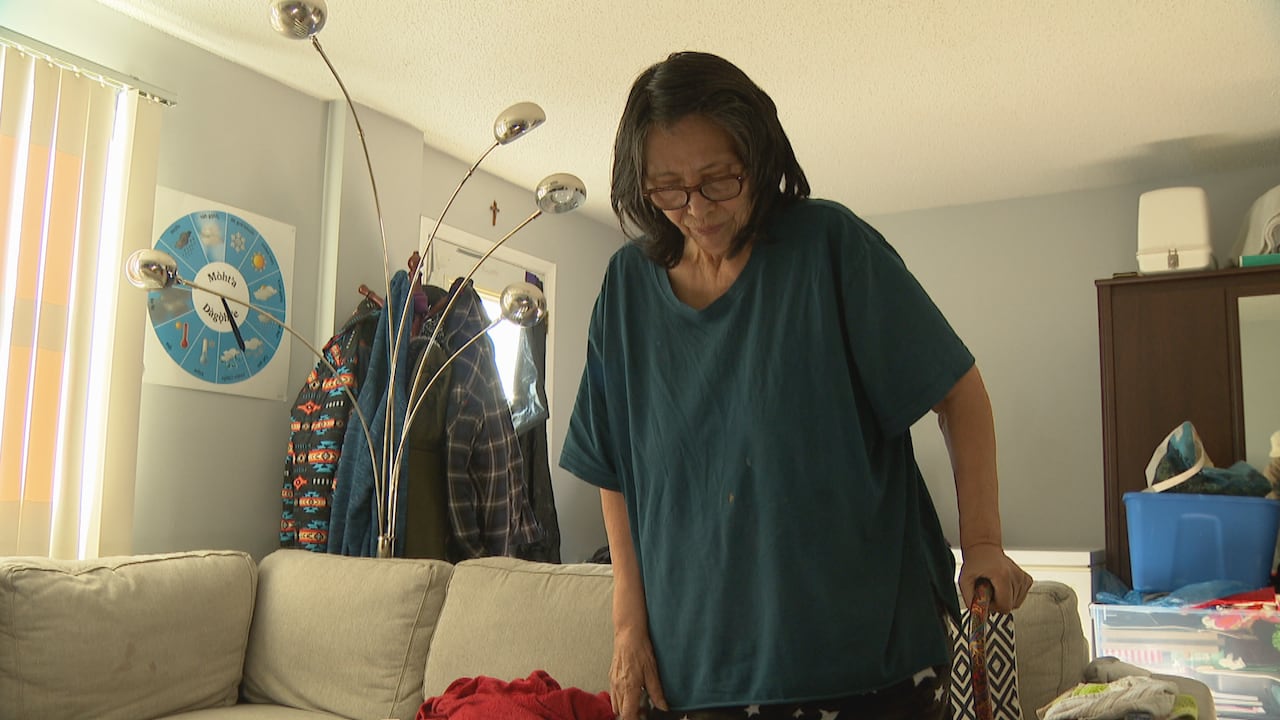
Blackduck describes ALS as ‘a very dreadful, cruel disease.’ According to the ALS Society of Canada, approximately 4,000 Canadians are living with the disease at any given time. (Elliot Pope/CBC)
The Northwest Territories Health and Social Services Authority (NTHSSA) stated it cannot discuss individual cases. However, in an email to CBC News, the authority mentioned that diagnosing ALS is intricate due to the lack of a definitive test and the variability of early symptoms.
“We acknowledge that the process of diagnosing ALS can be challenging and may involve periods of uncertainty,” the statement indicated.
The ALS Society of Canada reports that around 4,000 Canadians are diagnosed with ALS at any given time, with approximately 1,000 fatalities attributed to the disease each year.
The health department of the N.W.T. noted it does not monitor ALS cases within the territory.
Additionally, the territory lacks a full-time neurologist to diagnose potential cases of the disease. The NTHSSA explained that neurology is not a core specialty service funded in the region.
The authority mentioned that it collaborates with a group of private neurologists in Alberta who offer visiting services in Yellowknife “at varying intervals.”
‘I dread that time when I have to face it’
Since being diagnosed, Blackduck has been researching ALS and watching interviews with others affected by the disease to prepare herself for the future.
“I won’t be able to speak anymore … I won’t be able to eat salads because my muscles are deteriorating,” she expressed.
“I will require oxygen, along with feeding tubes and a wheelchair. I won’t be able to move, not even my fingers. Everything will just become completely non-functional.
“I fear the time when I will have to confront that,” she added.
The N.W.T. health department did not provide information on whether Blackduck would receive reimbursement for her trip to Alberta for a diagnosis. The department stated it cannot comment on individual cases and that patients must obtain a medical referral as per the territory’s medical travel policy.
“If a resident needs medical travel, we advise them to collaborate with their health care provider to submit a request,” the department mentioned in an email to CBC News.
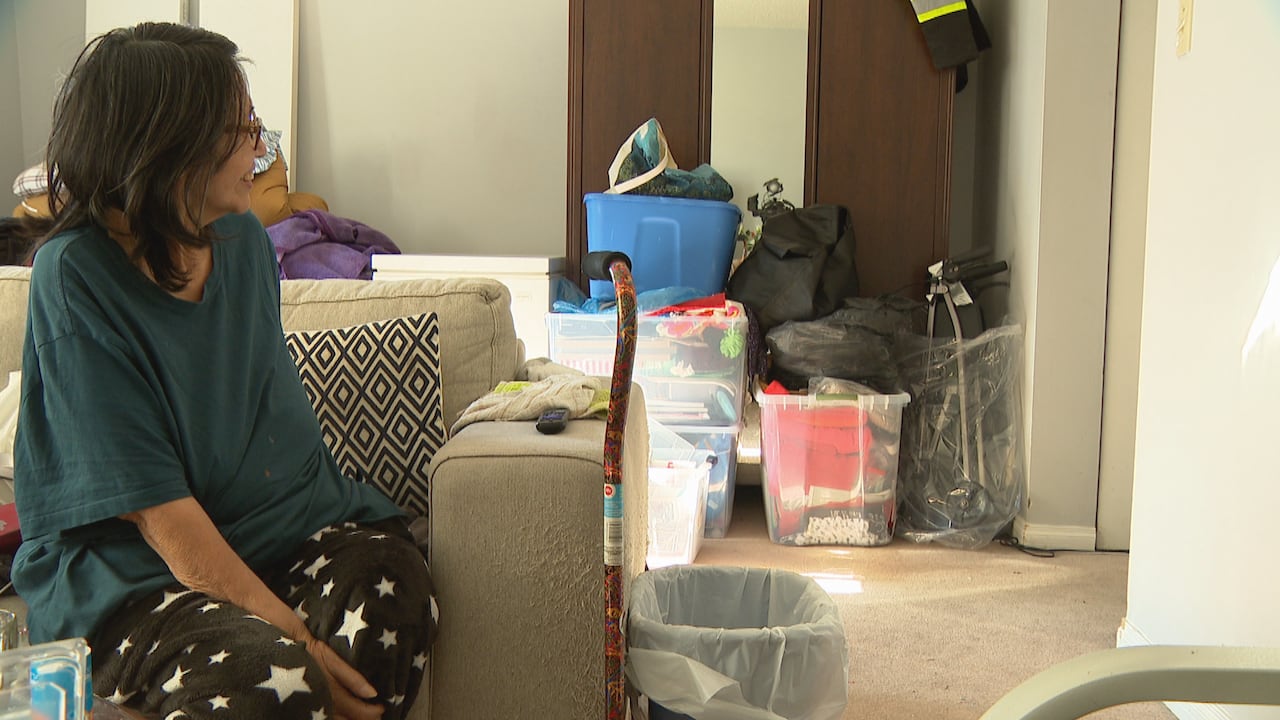
Blackduck is contemplating a move to Edmonton, where she hopes to find more resources for individuals living with ALS. (Elliot Pope/CBC)
Blackduck does not anticipate receiving reimbursement.
“I don’t believe I will receive a refund in my lifetime,” she remarked.
After spending her entire life in the N.W.T., she is now considering relocating to Edmonton in search of a support group.
The health department indicated that there is no support group for ALS patients in the N.W.T. They advised that individuals can reach out to ALS Canada or the ALS Society of Alberta for additional resources.
For the time being, Blackduck is concentrating on distributing her clothing, sewing machine, and other possessions.
“I feel relieved to finally understand my illness. I am also thankful for the time I have now to organize my affairs,” she concluded.