

Matthew Moroun, the American proprietor of the Ambassador Bridge, reached out to high-ranking officials in the Canadian government regarding the newly constructed Gordie Howe International Bridge three and a half months prior to the rival span’s inauguration. However, details of their discussions during that meeting remain mostly undisclosed.
CBC News discovered the April 7 meeting through federal briefing notes acquired under the Access to Information Act. The 17-page document is accessible for public viewing at the conclusion of this article.
Documents indicate that Moroun, who operates from Michigan, was joined by Kevin Kalczynski, a senior attorney for the family’s businesses, and Brennan Lee, a senior financial officer and Moroun’s son-in-law.
Representing Canada were Housing Infrastructure and Communities Canada deputy minister Paul Halucha, assistant deputy minister Marco Presutti, and Jesse Tracey, a senior federal attorney.
‘You are here to listen’
The documentation reveals that Moroun initiated the request for the meeting with Canadian representatives, but parts of the agenda, as well as the government’s summary and analysis of the session, were obscured.
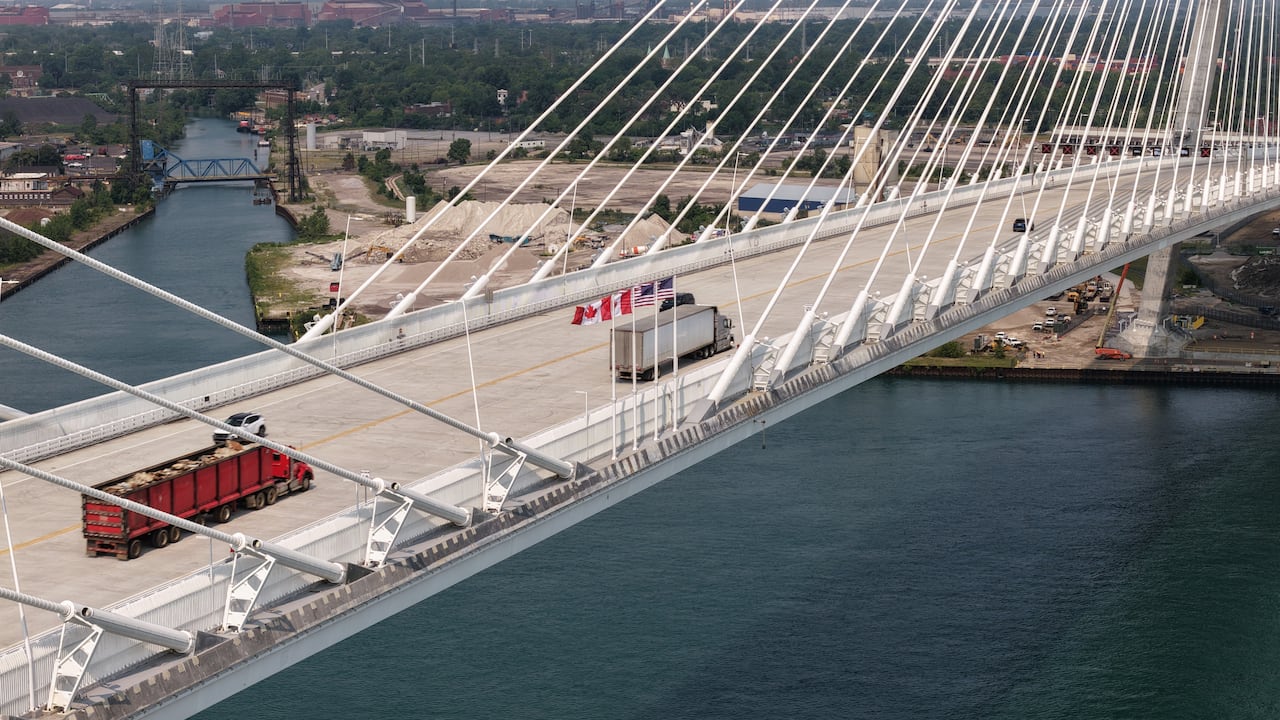
The Gordie Howe International Bridge links Windsor, Ontario, and Detroit, introducing publicly funded competition to the privately owned Ambassador Bridge. (Patrick Morrell/CBC)
CBC News reached out to the Ambassador Bridge for Moroun’s perspective on the meeting and his requests from Canadian officials, but did not receive a reply prior to publication.
The potential consequences were significant. Moroun had considerable financial interests at stake — estimates from the U.S. government suggested that the new bridge could capture nearly half of the traffic currently using the Ambassador Bridge.
The Ambassador Bridge itself is a crucial connection between the two nations, facilitating over $140 billion in merchandise trade in 2021 alone — approximately $390 million daily, accounting for 26 percent of Canada’s road exports, as reported by Transport Canada.
-
Gordie Howe bridge will cut deep into truck traffic at competing Ambassador Bridge: DHS
-
Michigan Senate candidate accuses Trump of keeping Canada-U.S. bridge closed to help donor
The Canadian government also had its own motivations for the meeting. Officials were under significant political pressure from the White House to expedite the opening of the $6.4 billion Gordie Howe bridge.
Briefing notes prepared for Halucha characterized his purpose in the meeting as follows:
“Note you are here to listen and are eager to hear Mr. Moroun’s perspective, as well as gain insight into his views on corridor operations as the new bridge approaches its opening, and any thoughts he may have regarding the resolution of pending issues.”
Much of the content elaborating on those issues and segments of the government’s subsequent summary of the meeting were concealed.
Behind closed doors
Laurie Trautman, director of the Border Policy Research Institute at Western Washington University in Bellingham, Washington, commented that the presence of a private owner introduces a dimension typically absent in the management of an international border crossing.
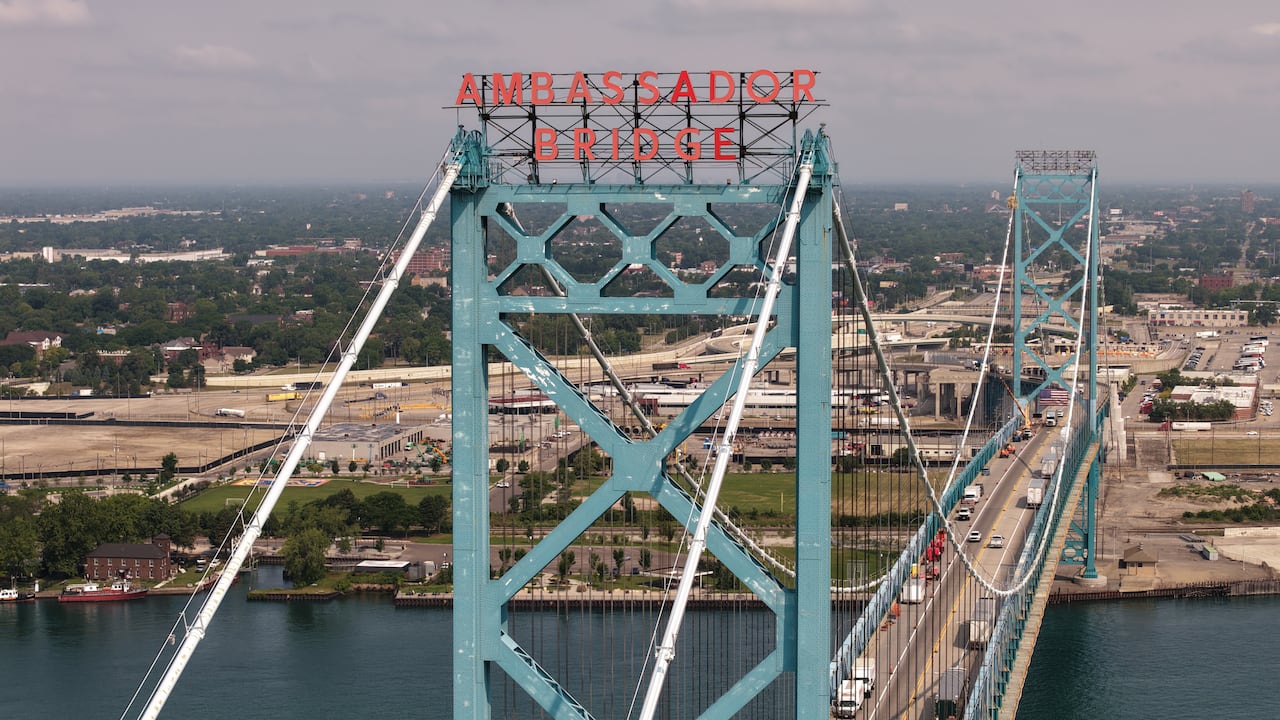
The Ambassador Bridge is captured on July 28, the day following the inauguration of the Gordie Howe International Bridge, which ended nearly a century of private monopoly over commercial bridge traffic between Windsor, Ontario, and Detroit. (Patrick Morrell/CBC)
“It’s not just about improved accessibility or enhanced efficiency in trade flows; it revolves around profits,” she stated.
The situation itself may also be exceptional: Trautman noted that she is unaware of another instance where a fully privately owned international crossing operates alongside a publicly owned counterpart.
She mentioned that this unusual relationship, involving a private entity, adds complexity to diplomacy, raising concerns about transparency during a period of strained relations between Canada and the United States.
“Those government-to-government communications are only as robust as the relations between the governments,” she remarked. “I think Canada and the U.S. are becoming increasingly transactional in their diplomatic approaches.”
The Canadian government has made public the text of a new agreement with the U.S. to finally open the long-awaited Gordie Howe International Bridge linking Michigan and Ontario. CBC Windsor’s Emma Loop dissects the contentious agreement.
Housing Infrastructure and Communities Canada stated in an email that discussions with private bridge owners are commonplace.
“Engagements with international bridge owners who support trade and commerce to Canada are ongoing and occur through various means,” the department noted.
The department refrained from commenting on the ongoing litigation but emphasized its commitment to collaborating with stakeholders to “enhance a critical trade corridor that generates billions in economic activity on both sides of the border.”
From monopoly to competition
A federal briefing note prepared after the meeting, dated April 24 and included in the materials obtained by CBC News, stated, “Mr. Moroun acknowledged that GHIB will proceed to opening,” referencing the Gordie Howe bridge. This acknowledgment occurred a day following the April 7 meeting with senior Canadian officials.
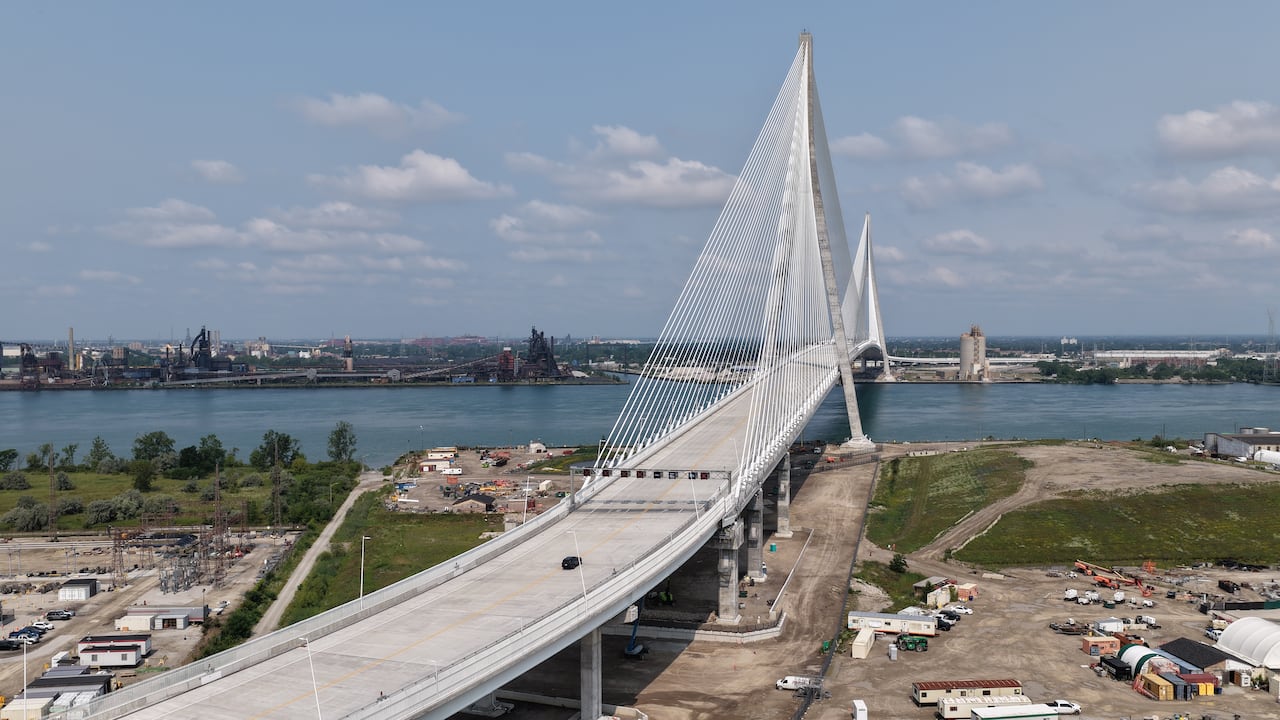
The Gordie Howe International Bridge is viewed from above on July 27, its opening day. The occasion introduced a second major bridge crossing to the Windsor-Detroit corridor. (Patrick Morrell/CBC)
Regardless of what transpired in private discussions, the competitive landscape shifted shortly afterward.
The same briefing note indicated that just 11 days following the meeting, “the Ambassador Bridge announced reductions to toll rates for some of its users, slightly positioning them below those intended for the GHIB.”
John Sutcliffe, a political science professor at the University of Windsor, has examined the Moroun family’s long-standing efforts to safeguard the Ambassador Bridge against competing crossings.
“This is a classic transition from a monopoly scenario to one characterized by competition, which typically drives prices down,” he observed.
New rival, new strategy
Sutcliffe pointed out that for the older, smaller, and less accessible Ambassador Bridge, the new publicly owned competitor poses a significant threat.
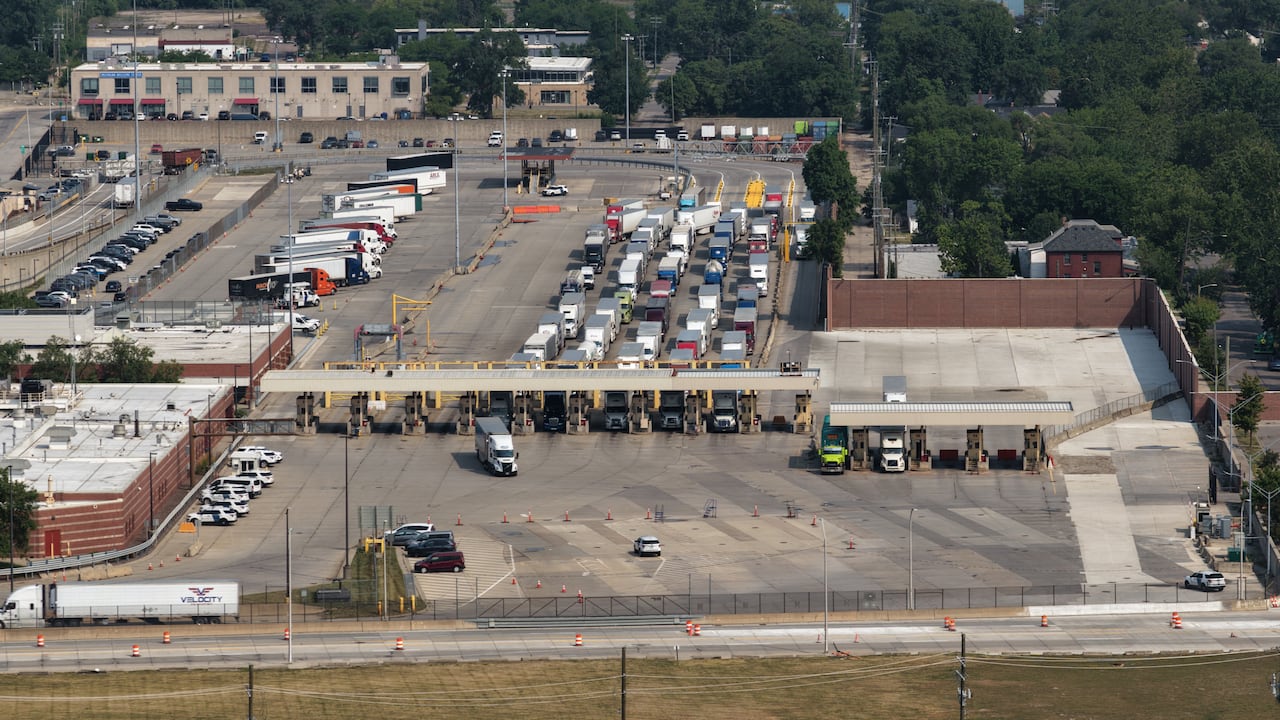
Trucks navigate through the customs facilities of the Ambassador Bridge on July 28. The new six-lane Gordie Howe bridge provides modern border infrastructure and a direct highway-to-highway connection. (Patrick Morrell/CBC)
“Introducing a new competitor that is significantly larger, equipped with advanced infrastructure, and capable of handling traffic more efficiently presents a major challenge,” he noted.
Sutcliffe indicated that while strategies may have evolved as the Gordie Howe bridge transitioned from concept to reality, the ultimate goal has remained consistent: to safeguard the family business.
Since 2014, this campaign has involved tactical land acquisitions whenever a route for a competing bridge was identified, alongside political lobbying across both borders, Sutcliffe stated. The briefing notes also highlight 22 individual legal challenges initiated by the Morouns over the last two decades.
Strange political bedfellows
“Securing political backing has long been a fundamental aspect of the Ambassador Bridge’s operations,” Sutcliffe remarked.
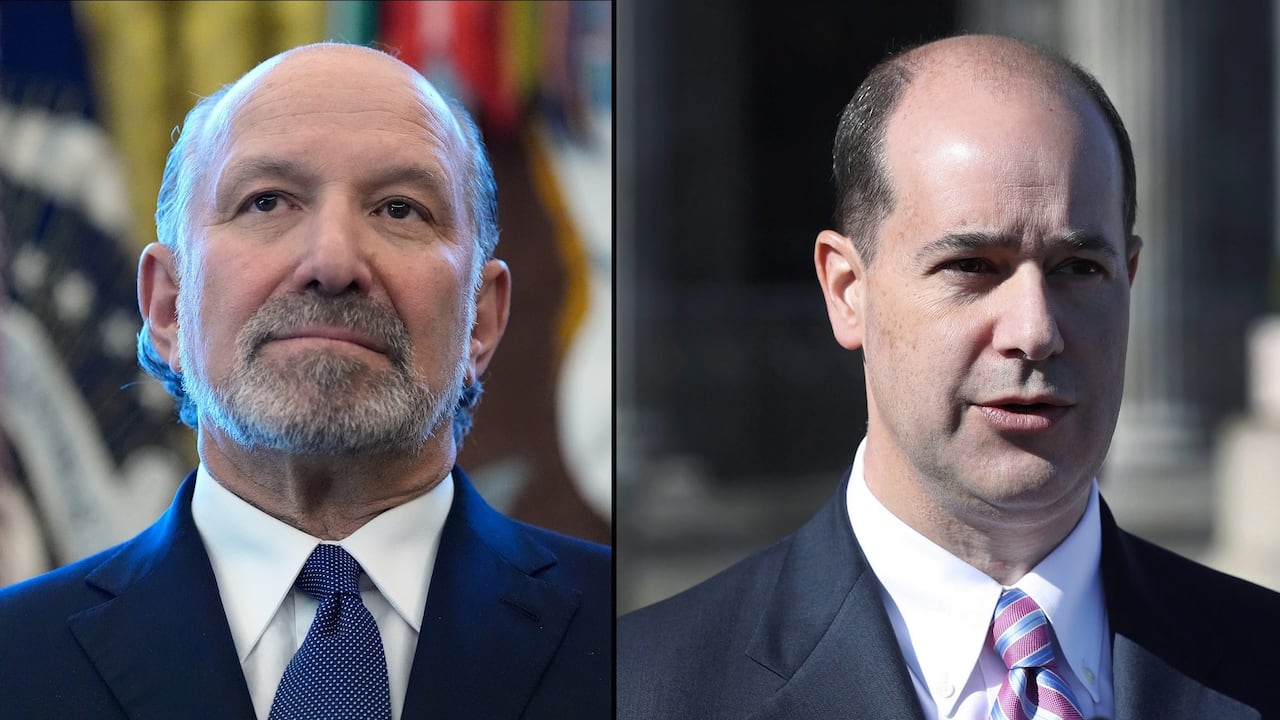
U.S. Secretary of Commerce Howard Lutnick, left, and Moroun, right, are depicted in the composite image. The Trump administration’s ‘America First’ policy creates an unusual alignment with a family whose business relies on cross-border trade. (Alex Brandon and Carlos Osorio/The Associated Press)
Sutcliffe suggested that the Trump administration might represent a particularly open audience. He noted the parallels between Trump’s inclination towards private enterprise and the Moroun family’s enduring resistance to publicly owned competition.
“Moroun’s stance aligns with Trump’s worldview, resulting in a political dynamic focused on self-interest and what benefits the United States,” Sutcliffe remarked.
Sutcliffe suggested that the Morouns have found themselves in sync with Trump’s “America First” ideology, even as undermining cross-border trade could ultimately be detrimental to the Ambassador Bridge itself.
Tag: rewrite-pending