

The relatives of Abisay Cruz are seeking clarification on why Montreal police employed a contentious restraint technique during the encounter that led to his death. They assert that a recently published coroner’s report did not address the rationale behind officers using a method that the police service claims it does not instruct.
“We are eager to understand why such force was necessary and why his situation wasn’t managed differently,” Josué Cruz, Abisay’s brother, expressed in an extensive email to CBC News.
“For us, what transpired cannot merely be labeled as an intervention that went awry. Abisay was experiencing a crisis and needed assistance.”
Abisay, the second youngest of five siblings and a father to a young son, passed away on March 30, 2025, following a police intervention in the Saint-Michel area of the city. Video footage of the incident led to protests and increased public distrust in law enforcement.
“We have watched the videos. We witnessed how Abisay was restrained, handcuffed, and held down,” he stated.
Cruz mentioned that their family has been “utterly shattered” by the loss of his brother.
“We have lost a son, a brother, a father, and a beloved family member,” he remarked.
“My mother, father, and older brother, who were present during the incident, remain profoundly traumatized. The events that unfolded before our eyes have left us with scars that will never fade.”
Hogtie method likely contributed to death: coroner
In a report published earlier this week, coroner Géhane Kamel determined that Abisay’s death was accidental, but noted that the hogtie technique used by officers to restrain him was likely a contributing factor.
The hogtie technique involves binding a person’s limbs behind their back while they lie face down.
Due to “serious concerns regarding safety and adherence to fundamental rights,” this method is restricted or prohibited in various police departments, Kamel stated.
The situation began when police responded to reports of a man in distress on an apartment balcony, where he was throwing items into an alley.
The report indicated that Abisay had experienced little sleep over the preceding three days while facing deportation to Honduras. Toxicology results revealed a dangerously high level of cocaine in his system, which the coroner cited, along with the physical restraint, as factors contributing to his death.
Five officers attempted to communicate with Abisay and persuade him to cease resisting arrest. He remained pinned face down for over two minutes before officers repositioned him onto his side, according to the coroner.
As they carried him down the stairs, Abisay was kept in a hogtie position, with his legs bent toward his buttocks and his hands, still cuffed behind his back, drawn close to his feet.
A paramedic who assisted Abisay down the stairs noted that he “did not seem to be moving, struggling, or groaning,” as per the report.
The coroner pointed out a lack of direction from a police sergeant present at the scene, stating that the supervisor did not intervene as Abisay’s condition worsened.
Paramedics performed CPR in the ambulance outside the apartment and during transport to the hospital, where he was pronounced dead.
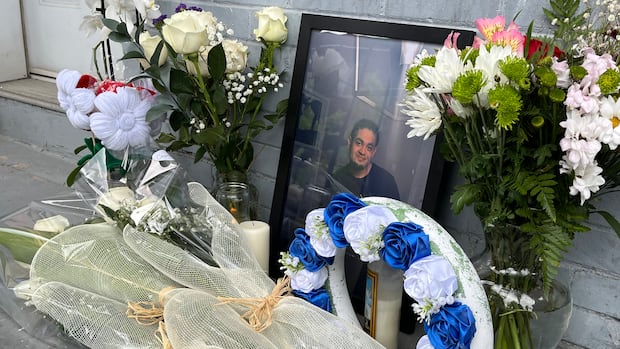
A coroner’s report has concluded that 29-year-old Abisay Cruz’s death following a police confrontation was accidental, but the hogtie technique employed by officers to restrain him was a ‘highly likely’ contributor.
Police academy, SPVM do not teach technique
The Montreal police, formally known as the Service de police de la Ville de Montréal (SPVM), has confirmed that the hogtie technique is not part of their training curriculum.
The provincial police academy, the École nationale de police du Québec, also stated that it has never offered training on this technique, as confirmed by a spokesperson to CBC News.
An SPVM representative stated that officers are “trained to recognize indicators of medical distress, especially in cases of intoxication, and the necessity for prompt medical assistance once a subject is subdued.”
“This principle is already incorporated into various training programs; however, we will ensure that officers can fully apply this concept when required,” the statement read.
When CBC News inquired about the use of an unauthorized technique by officers and whether there were any repercussions, an SPVM representative refrained from providing details, citing employee confidentiality.
The spokesperson added in an email that “action was taken” concerning the officers and supervisors involved after the March 2025 incident.
In her report, Kamel urged the SPVM to formally prohibit the hogtie technique and suggested that the police service provide its officers with naloxone kits and implement body-worn cameras when attending to individuals in crisis.
The spokesperson mentioned that police would address the recommendations.
Quebec’s prosecutors’ office stated last March that it would not pursue charges against the officers after a review by the province’s police oversight body.
In a statement detailing its decision, the prosecution indicated that the “responding officers exercised reasonable and minimal force to subdue the man, who did not cooperate.”
‘We want clear answers’
Stephanie Germain, a community activist who helped organize a march in memory of Abisay last year, stated that the coroner’s conclusions raise concerns about police behavior.
“This is significant,” Germain remarked. “The government needs to investigate and provide the community with the answers we seek.”
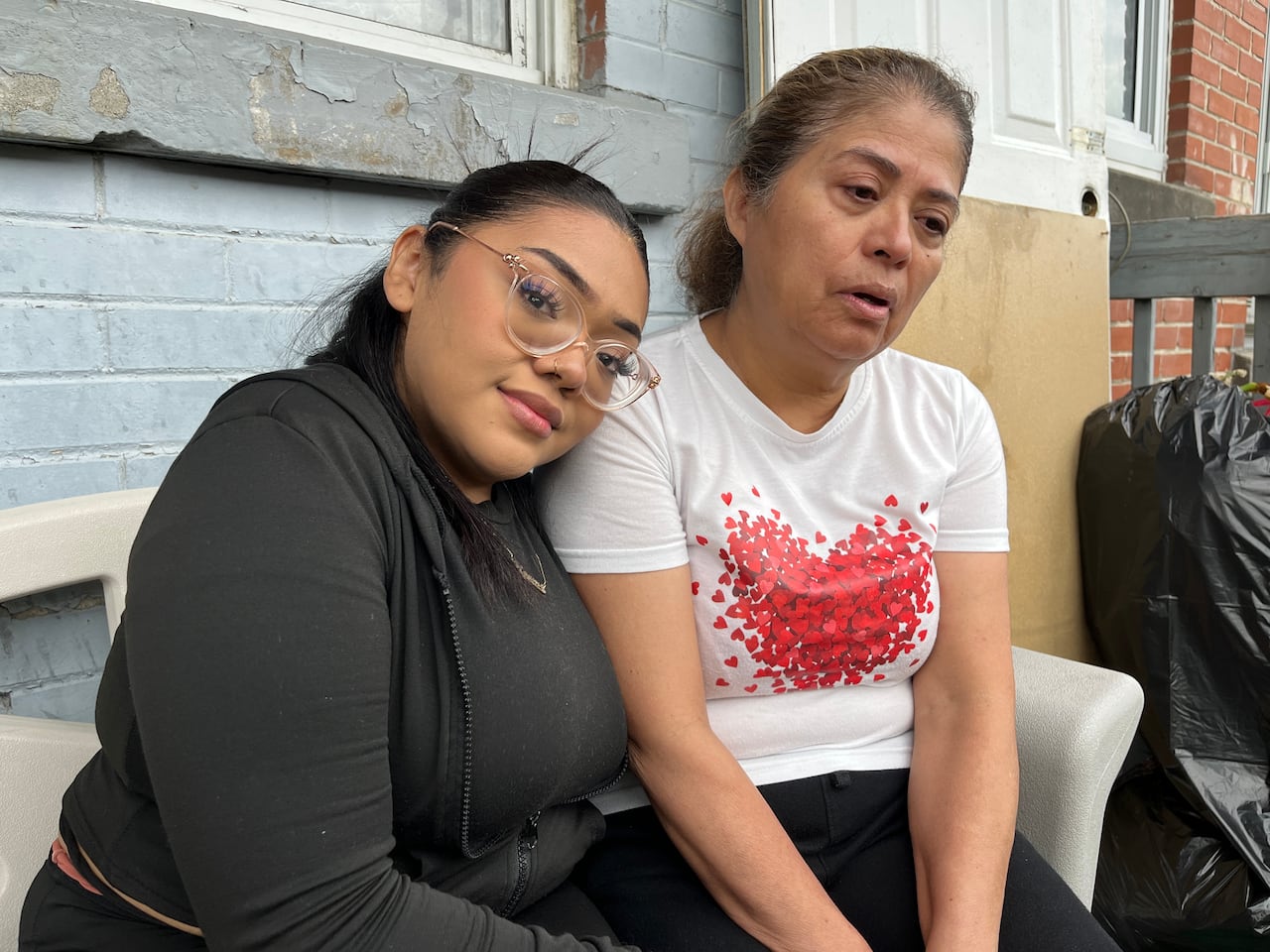
Cruz’s mother, Marcelina Isidro, is seen here on the right next to her niece, sitting on her balcony during a vigil last year. (Paula Dayan-Perez/CBC)
In his email, Josué Cruz rejected the SPVM’s reassurances, questioning why the hogtie technique “was applied to Abisay and who made that decision” if the SPVM insists they do not teach it.
“We seek clear answers regarding police training, the methods employed, and everyone’s accountability,” he stated.
Cruz also linked his brother’s death to a broader pattern of lethal police encounters in the Montreal region, naming 18-year-old Fredy Villanueva and 15-year-old Nooran Rezayi.
“No family should have to witness a loved one perish during a police intervention,” he stated.