

You are Johnny Depp. Your career, heavily reliant on the goodwill and fondness that arises whenever people hear your name—or at least that of Captain Jack Sparrow—has been significantly damaged.
A tumultuous, highly publicized series of accusations related to on-set aggression (including a lawsuit you resolved) and domestic violence (which you have contested), alongside high-profile defamation trials, have collectively damaged your once-stellar reputation. Your most recent major role in a franchise, portraying Gellert Grindelwald in the Harry Potter spinoff Fantastic Beasts, concluded when Warner Bros. requested your resignation following your defeat in a libel case against the Sun newspaper for labeling you a “wife beater.”
Since then, you have made few notable appearances. Meanwhile, years of extravagant spending led you to acquire a private island and an entire French village (along with an almost unbelievable amount of wine enough to intoxicate an entire nation) and accumulate debt comparable to some of the world’s most extravagant small countries.
What is your next step?
Interestingly, for your first significant Hollywood project post your defamation trial against ex-partner Amber Heard (a case you predominantly won, resulting in Heard being ordered to pay you $10 million US regarding her allegations of abuse), you have selected Ebenezer. This well-loved, albeit frequently retold, narrative may come across to some as more of a publicity strategy than a genuinely enjoyable film.
Upon reflection, remaking Charles Dickens’s A Christmas Carol might not be such a bad idea. The story features our titular miser, Scrooge, learning the value of Christmas and compassion through visits from one ghost and three spirits, all set in Victorian England. You once more get to wander through the grimy streets of London, employing the often off-putting accent you have honed throughout your career, which resonates with North American audiences but unsettles British viewers.
However, as you strut around in meticulously worn cloaks and quirky period hats, it may be challenging for viewers to rekindle the fondness they once felt while watching Edward Scissorhands, Sweeney Todd, or even your portrayal of Willy Wonka in Charlie and the Chocolate Factory. They used to admire you, right?
This seemingly decent comeback feels reminiscent of that. Can’t they find a reason to appreciate you again?
-
REVIEW
Apple TV’s Nocturne is Nordic noir by the numbers
-
REVIEW
Wild Horse Nine is a bleak, hopeless sign of the times. You’re going to love it
Truthfully, this performance isn’t bad. With your grimaces and grunts, your comically wide-eyed screams and tender monologues effectively guide audiences through Dickens’s classic, albeit overly sentimental narrative of bitterness transforming into redemption.
This is not a career-defining Depp performance, nor is it particularly deep or innovative. However, it does share similarities with your previous work. The quirky smirk and casual humor that supported multibillion-dollar films remain present. That has to count for something, right?
You are also backed by an impressive cast: Ian McKellen as your cautionary-tale business partner Jacob Marley, Rupert Grint as your beleaguered employee Bob Cratchit, and Tramell Tillman as the ominous, pagan-like Ghost of Christmas Present.
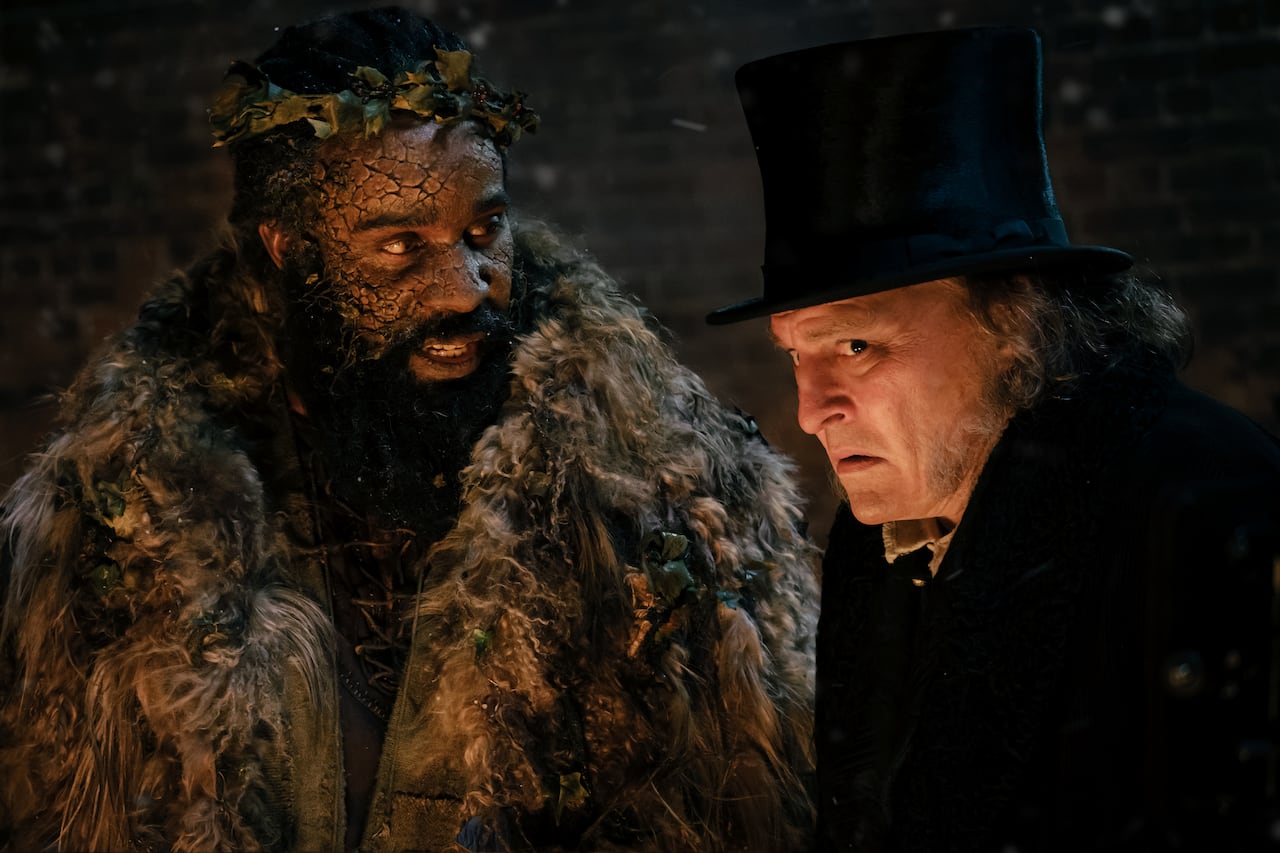
Tramell Tillman, left, portrays the Ghost of Christmas Present alongside Johnny Depp’s Ebenezer Scrooge in Ebenezer. (Jaap Buitendijk/Paramount Pictures)
Each actor fulfills their role: delivering witty lines from effectively archetypal—and necessarily one-dimensional—characters, aimed at making your unlikable protagonist endure enough to, in the end, appear sympathetic, humanized, and deserving of reintegration into society.
In fact, it’s all so recognizable and typically Depp-like that audiences might find themselves half-expecting Helena Bonham Carter to appear from behind each shadowy, cobblestoned corner. Director Ti West (MaXXXine, Pearl, X) attempts to infuse the source material with his distinctive campy-horror style, but instead of the captivating genre blend reminiscent of Tim Burton’s Scissorhands, the result resembles an afternoon pantomime.
There are excessive elements of clanking chains and wailing ghosts reminiscent of Fleet Street central casting. West’s few original takes seem to aim for humor, but often miss the mark, coming across as bluntly offensive. For instance, rather than Dickens’s trembling child-spirits representing “ignorance” and “want,” we encounter monsters akin to Dr. Seuss’s Thing 1 and Thing 2, screeching and crawling across the ground like tiny, transparent ankle-biters from hell.
Redemption roulette
So, what prompted this choice, Johnny? When you think about it, opting for this now-typical tale instead of seeking reinvention aligns perfectly with your current needs. You are not the first celebrity to face “fall from grace” headlines. And among the extensive list of attempts to regain your footing, a common thread often emerges.
There are less successful efforts, like Will Smith’s painfully self-critical Emancipation, which tells the story of a man subjected to relentless abuse, with images of his whip-scarred back contributing to the abolition of slavery. Or Kevin Spacey’s amateurish The Man Who Drew God, depicting a blind individual wrongfully accused of child molestation. Then there’s Armie Hammer’s Citizen Vigilante and Jonathan Majors’s Run Hide Fight: Infidels, both featuring a lone man fervently battling those the films portray as scum.
On the other hand, there have been successful comebacks. Winona Ryder made a return from legal troubles with a minor role in Black Swan, but her true comeback came as the selfless and dependable mother in Stranger Things. After gaining a reputation for poor performances, Mickey Rourke achieved a (temporarily) triumphant return as the battered but courageous lead in The Wrestler.
-
REVIEW
Will Smith’s comeback, Emancipation, reduces a slave narrative to an action film
-
REVIEW
Tom Cruise is fantastic in Digger. You might hate it
Robert Downey Jr. achieved perhaps the most remarkable comeback in history, replacing the public’s memory of substance abuse and arrests with his portrayal of a world-saving, carefree billionaire altruist in Iron Man.
Of course, the quality of a film does not reflect whether a star is a good person. While not a universal truth, the pattern for a successful comeback is fairly consistent: to rehabilitate a tarnished reputation after controversy, one often frames themselves as a victim or a self-sacrificing hero (or both) in a narrative that lightly parallels their own life.
While Ebenezer may be generally acceptable—and as creatively stimulating as the novella’s entry on “Simple Wikipedia”—it at the very least serves your purposes. Based on a tale so effective at fostering goodwill toward humanity that it essentially created the modern notion of Christmas generosity, what else could you desire?