

Ontario’s Premier Doug Ford firmly reiterated his stance that U.S. President Donald Trump could “kiss my ass” during a heated exchange on Monday, in which Trump labeled Ford as “Flunky Ford” and characterized him as the “less charismatic, intelligent” version of his late brother, Rob Ford.
The verbal sparring marks the latest developments in the ongoing Canada-U.S. trade war, which intensified after the collapse of trade negotiations over the weekend.
As of early Saturday, the U.S. imposed 50 percent tariffs on approximately $28 billion worth of Canadian goods. Prime Minister Mark Carney announced that retaliatory tariffs, set to match the U.S. measures dollar-for-dollar, will take effect on September 8.
Ford first made his bold statement on Toronto’s Newstalk 1010 radio, declaring that Trump could “kiss my ass” in reaction to the tariff threats.
The premier echoed this sentiment at a news conference in Hamilton, emphasizing his commitment to safeguard the “jobs and paychecks” of Ontario’s workforce. He was accompanied by Economic Development Minister Vic Fedeli and Finance Minister Peter Bethlenfalvy.

Fifty percent U.S. tariffs on a variety of Canadian goods came into effect early Saturday. As the Canada-U.S. trade war escalates, Toronto residents share how they’re feeling about the tariffs — with some saying they’ll be buying Canadian.
Trump targeted Ford in a post on Truth Social during the premier’s news conference on Monday afternoon.
In his remarks, Trump dismissed Ford’s comments as “bluster,” labeling both Ford and Carney as “clowns” and ineffective leaders.
When asked by a CBC reporter about Trump’s post, Ford stated he would not engage with “a dictator like President Trump.”
“He’s the kind of person who would take your lunch money one day, snatch your toque off your head the next, and then steal your running shoes,” Ford commented.
“I won’t take advice from someone who’s the king of bankruptcies.”
During the news conference, Ford also stated that “everything is on the table” regarding potential retaliatory actions.
Earlier on Monday, he revealed to The Associated Press his willingness to cut off electricity and essential minerals to the U.S. as the trade conflict continues. Ontario supplies power to around 1.5 million residents in Michigan, New York, and Minnesota.
Trump promises new tariffs
Before launching his attack on Ford, Trump had intensified the trade war with a post on Truth Social Monday, accusing Canada of “ripping off the United States” and announcing that starting January 1, 2027, the U.S. will raise tariffs on Canadian automobiles, car parts, and steel to 50 percent.
Currently, the tariff on Canadian steel is already set at 50 percent, while the tariff on car parts and vehicles stands at 25 percent, according to the Canadian government’s website .
Ford expressed his “full support” for Carney’s choice to withdraw from Canada-U.S. trade talks. Other provincial leaders have also shown significant backing for Carney’s decision to abandon the trade agreement.
Earlier on Monday, Ford told Toronto’s Newstalk 1010: “We need to throw everything in the kitchen sink at them. He’s arrogant. He’s cocky.”
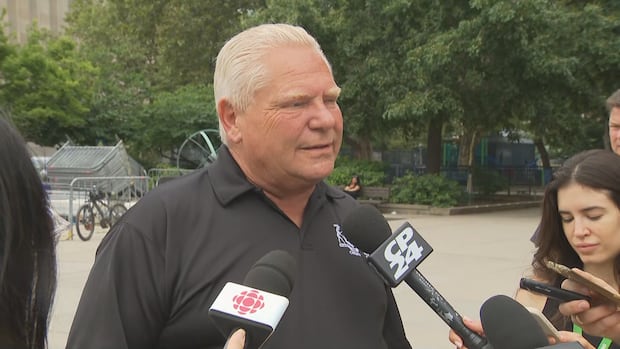
Ontario Premier Doug Ford slammed the proposed trade agreement with the United States as a ‘bad deal’ for the province’s steel and auto sectors. Ford said he supports Prime Minister Mark Carney’s decision to suspend negotiations and that the province will help workers and businesses who now face a 50% tariff from the U.S.
Opposition parties demand Ford recall legislature
Amid the trade deal turmoil and Ford’s news conference, both the Ontario NDP and Liberals urged the premier to promptly recall the legislature to take decisive action on U.S. tariff relief.
In a Monday news release, Ontario NDP Leader Marit Stiles asserted that “as elected officials, it is our responsibility to immediately work against Donald Trump’s inexcusable and perilous tariffs.”
Stiles urged the Ford administration to adopt several retaliatory strategies, such as terminating any government contracts with U.S. companies and banning new AI data center agreements that “benefit U.S. entities.”
John Fraser, the interim leader of the Ontario Liberals, criticized Ford’s announcement in Hamilton, stating, “it wasn’t a plan.”
“There were no new measures. Not even a mention of direct income or benefit support for workers who could lose their jobs or homes,” he expressed in a news release.
Fraser also described Ford’s remarks to Trump as resembling a “WWE smackdown,” arguing they are not what Ontario families require.
Green Party Leader Mike Schreiner also called for a return to the legislature “so that all parties can collaborate to protect Ontario jobs, workers, and businesses,” in a statement sent via email on Monday.
During his news conference, Ford announced that the province would “immediately” widen eligibility for its Protect Ontario Financing Program, which offers emergency funding to businesses facing “significant tariff-related disruptions,” according to its official site.
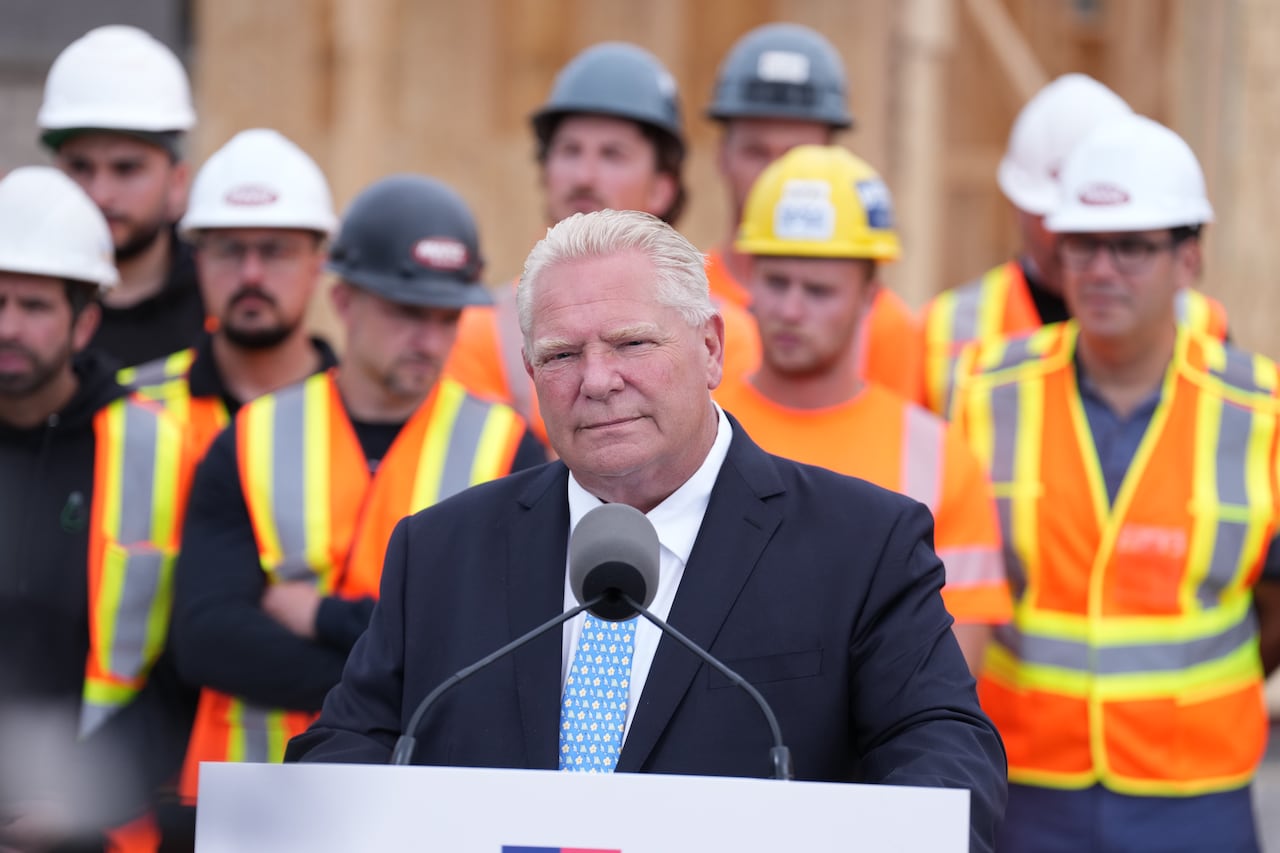
Ford said Carney has his ‘full support’ in his decision to walk away from Canada-U.S. trade negotiations. (Evan Mitsui/CBC)
Ford calls on support from federal government
On Monday, Ford was straightforward about the economic challenges posed by the trade war, stating that “all levels of government” must collaborate to “navigate through this battle.”
In addition to seeking cooperation from municipal leaders, he urged the federal government to “step up” with “significant support and regulatory changes,” which include:
- Abolishing federal greenhouse gas emissions standards for vehicles manufactured in Canada.
- Exempting sectors affected by tariffs from federal emissions performance standards.
- Making substantial investments in auto, steel, and manufacturing sectors.
- Focusing on “deep red states” in counter-tariff responses.
CBC News reached out to Global Affairs Canada for a response.
In an interview with CBC’s Power and Politics on Monday, Canada-U.S. Trade Minister Dominic LeBlanc indicated that “further measures” to safeguard Canadian workers and industries would be announced “this week.”
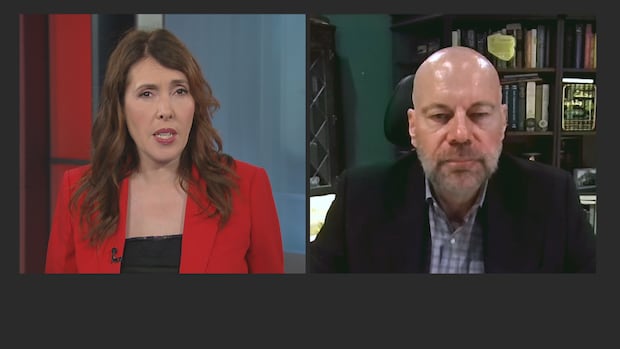
Get the latest on CBCNews.ca, the CBC News App, and CBC News Network for breaking news and analysis
Canada negotiated in good faith: expert
Daniel Tisch, CEO of the Ontario Chamber of Commerce, emphasized that Canada’s retaliatory tariffs must be “surgical,” focusing on American products for which there are clear Canadian alternatives available.
“The fact is, the Canadian government engaged in negotiations with good faith that was not reciprocated,” Tisch stated during an interview on CBC Radio’s Metro Morning on Monday.
“We’re dealing with an administration in the White House that doesn’t believe in win-win scenarios. However, that is the foundation of all successful business relationships,” he noted.
Despite the failed trade negotiations, Tisch remains optimistic that Canada will “overcome this difficult period,” highlighting that Canada, including Ontario, has outpaced the U.S. in job growth, and contrary to some bleak forecasts, the nation has not slipped into recession.
“I still believe in our chances and am confident that with the right collaboration between business and government, we can achieve positive outcomes.”