

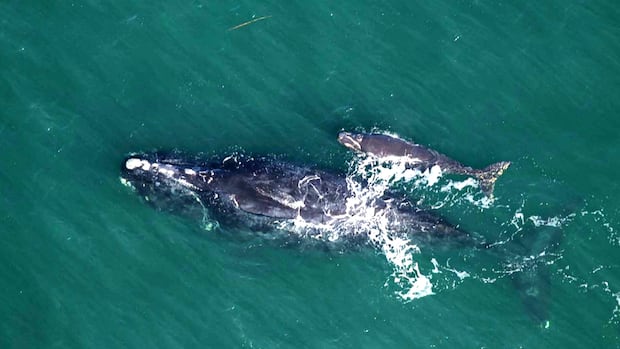
The year 2026 saw a remarkable increase in North Atlantic right whale births, with 24 calves recorded, the highest number since 2009. This includes a newborn sighted with its mother named Silt off the shores of Quebec in September. However, these young whales continue to face serious and ongoing threats.
With current estimates indicating a population of merely 382, the North Atlantic Right Whale Consortium is urging immediate measures to ensure the species’ survival.
Heather Pettis, who heads the right whale research initiative at the Anderson Cabot Center and chairs the North Atlantic Right Whale Consortium, stated, “The newly released estimate of the right whale population highlights the necessity for further efforts to protect this species.”
“The population is not yet on a clear path towards recovery and remains highly susceptible to entanglements and vessel collisions — dangers we know how to mitigate.”
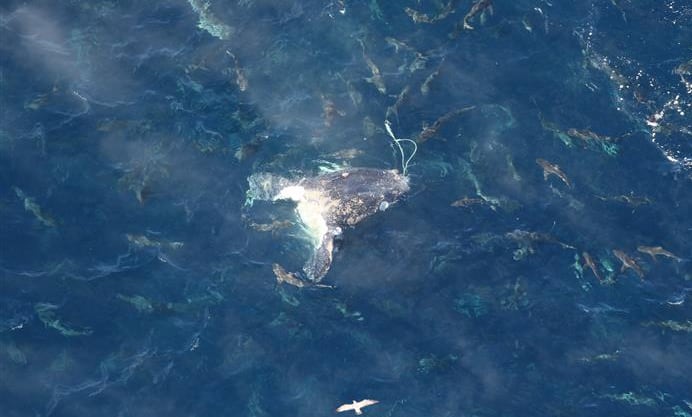
On Jan. 27, a four-year-old male named “Division” was found off the coast of North Carolina after succumbing to severe entanglement linked to Canadian snow crab fishing gear. In February, researchers discovered a deceased three-year-old female along a barrier island off Virginia’s eastern coast. (Submitted by Clearwater Marine Aquarium Research Institute)
In 2026, two whale deaths have been recorded: one due to entanglement and another with an undetermined cause. The carcass of a whale known as Division was discovered off North Carolina in January.
This four-year-old male was initially spotted in 2025, struggling with a fishing line wrapped around his head and mouth, which was cutting into his blowhole and lodged in his jaw.
Shortly after, the New England Aquarium identified a deceased three-year-old female right whale off of Virginia. In addition to these fatalities, there have been eight reported instances of human-related injuries to right whales this year: seven from entanglements and one from a vessel strike.
Philip Hamilton of the New England Aquarium in Boston has dedicated his research to North Atlantic right whales since the 1980s, driven by his compassion for these marine mammals that have been teetering on the edge of extinction for years.
Hamilton expressed the difficulty in imagining the suffering a whale experiences while caught in fishing gear.
“Imagine being ensnared in ropes that move with you … practically sawing into your flesh,” he remarked. “It’s truly agonizing. They lack arms, so the pain is … almost beyond comprehension.”
Hamilton is familiar with many of the remaining North Atlantic right whales by name, but he holds a particular fondness for the notable Admiral.
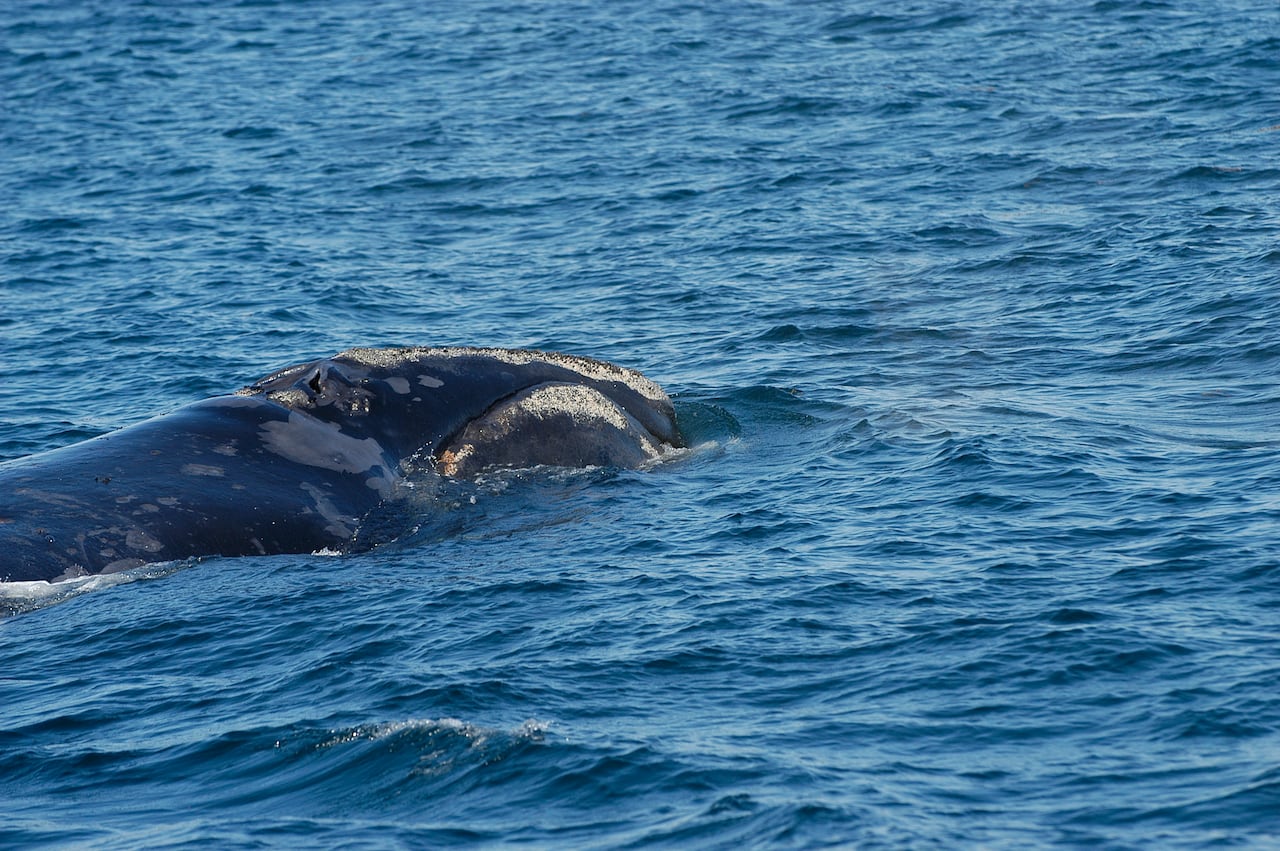
Admiral is beloved by biologists for her playful surfacing behavior. She suffered a significant entanglement in 2007 and has not been sighted since. (Submitted by New England Aquarium)
“She was an adult when first observed in 1980. She felt like the matriarch of the population. Her size was such that I could identify her from a mile away as she would breach like a submarine and bounce on the surface,” Hamilton recalled.
“She was known to perform headstands in certain areas, so you would often see her with her tail raised high in the air.”
However, the beloved Admiral has not been seen for over a decade following a severe entanglement with fishing lines.
“The right whales are doing everything they can. We need to ensure we are doing our part to safeguard them, as they cannot do anything more than what they are already doing,” Hamilton stated.
Whale-safe gear
In February, Ottawa introduced a Whale-safe Gear Strategy. They have been testing ropeless fishing technology in eastern Canada, including areas in western Newfoundland.
Andrea Morden, involved in whale management with DFO, indicated that by collaborating with fishers, they have made strides in reducing entanglements and demonstrating what a future whale-safe fishery could resemble.
“What we have discovered is that a universal gear solution will not be effective across the diverse fisheries of eastern Canada,” she remarked.
Morden highlighted that certain fisheries, particularly crab and lobster, present a higher risk due to their significant use of rope. She mentioned that the DFO is working with the fishing industry to trial gear modifications that will support both economic growth and the revival of the North Atlantic right whale population.
These adaptations go beyond just ropeless gear; they also include features that minimize the likelihood of whale entanglement, such as lower breaking-strength ropes and on-demand fishing equipment operated remotely.
Whale aware
With a broad smile, marine mammal scientist Jack Lawson from Newfoundland expressed how fortunate Newfoundlanders and Labradorians are to witness marine life, including sightings of a North Atlantic right whale earlier this summer. However, Lawson emphasized that this closeness to nature comes with its own set of responsibilities.
“We benefit from the presence of these animals in our waters annually, and I believe we have a duty to be cautious around them,” said Lawson, who is focused on studying North Atlantic right whales.

Jack Lawson finds it thrilling to see North Atlantic right whales in the waters of Newfoundland and Labrador. Yet, he worries about their safety as they approach the coast. (Leila Beaudoin/CBC)
He stressed that it’s essential to raise awareness — among both small boats and large vessels — about the potential presence of these mammals and the lethal risks of collisions.
-
A surprise baby right whale spotted near Quebec is bringing ‘a lot of hope’ for the species
-
North Atlantic right whales at greater risk of collision with boats at night: study
Experts indicate that predicting where collisions with North Atlantic right whales will happen is challenging. The species’ movements are significantly influenced by their seasonal migrations and calving requirements, prompting researchers to advocate for enhanced collaboration between Canada and the United States.
Pettis emphasized that the recovery of the species hinges on sustained protective measures in both nations.
Download our free CBC News app to sign up for push alerts for CBC Newfoundland and Labrador. Sign up for our daily headlines newsletter here. Click here to visit our landing page.