

This summer has undoubtedly been marked by anxiety and apprehension in Eastern Europe, as increasing indications suggest that Russia might be poised to further challenge NATO unity in an attempt to fracture it.
Since the spring, Poland and Romania have experienced several Russian drone incursions and at least one missile strike.
The speculation regarding a potential Russian incursion grew following the unexpected visit of the CIA director to Moscow last week.
What troubles officials in Poland and the Baltic states is not the immediate threat of Russian armored units breaching their borders.
Their concern lies in the possibility that Moscow may think it can execute a strategically ambiguous, limited act of aggression—sufficiently intimidating or destabilizing to NATO, yet small enough to avoid triggering the political complexities involved in invoking Article 5 of the Western military alliance’s self-defense clause.
In late July, a Russian cruise missile struck Poland’s Lublin province after penetrating deep into Polish territory during a significant assault on Ukraine. Additionally, numerous drones have approached or tested Polish airspace in the weeks that followed.
A Polish defense analyst specializing in Russian military tactics and politics remarked that the conflict in Eastern Europe is nearing a critical juncture, with the Kremlin concluding that the only way to overcome Ukraine is by politically fracturing NATO.
“There is frustration over the inability to dismantle the Ukrainian armed forces and to defeat them on the battlefield,” noted Withold Rodkiewicz, a security specialist at the Center for East European Studies at the University of Warsaw.
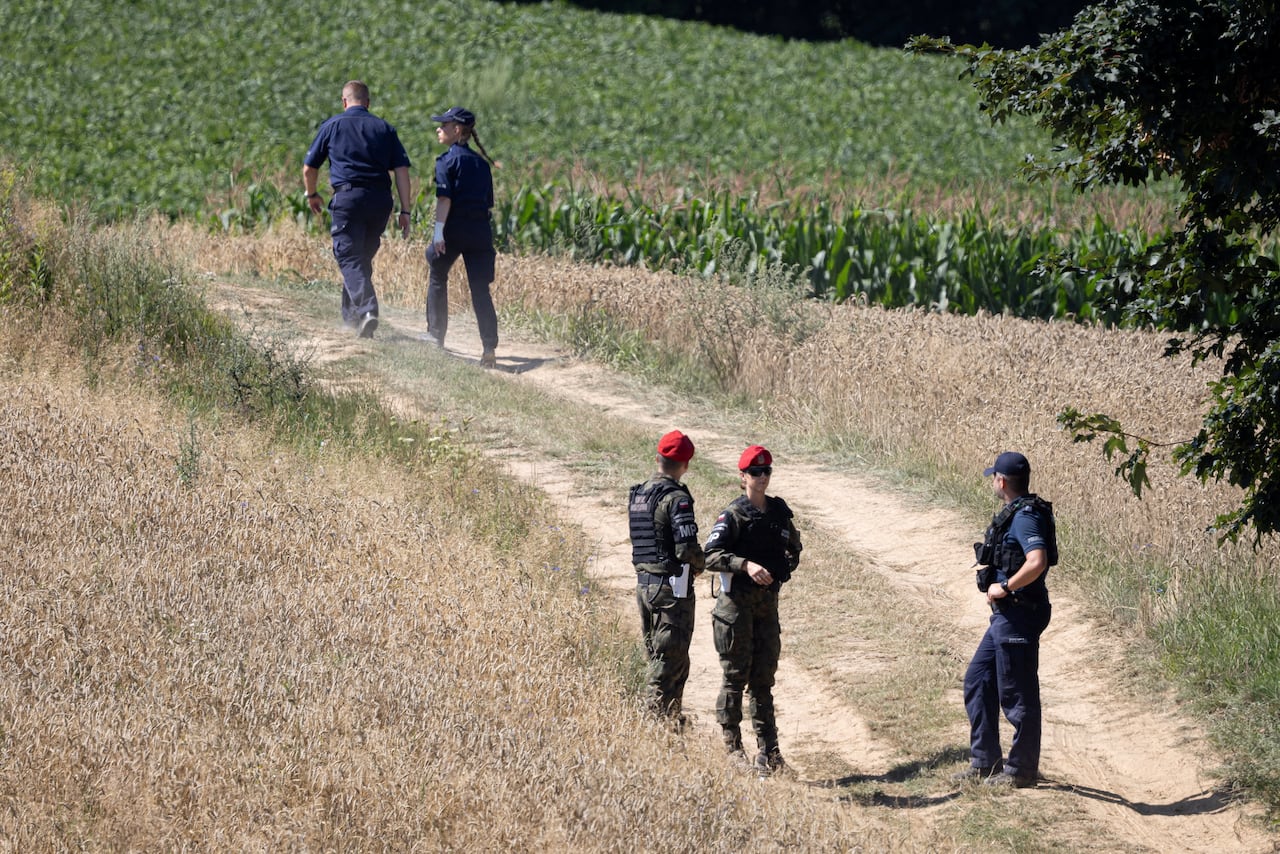
Military and police personnel investigate the site where an unidentified flying object, suspected to be a Russian missile, crashed in a field near Lublin, Poland, after encroaching on Polish airspace on July 30. (Agencja Wyborcza.pl via REUTERS)
According to Rodkiewicz, the Russian “elite” are aware that they are not prevailing in the conflict, and Ukraine’s increasingly successful strikes on oil and commercial infrastructure could threaten the Kremlin’s hold on power.
“The prevailing analysis in Moscow is that the primary reason Ukrainians are able to resist is due to their support from the West,” he stated, emphasizing that only a decisive victory in Ukraine would satisfy the Kremlin.
“They are not seeking a way out. They are not looking for an off-ramp,” he added. “As they consider their next steps, escalation seems to be the obvious choice.”
Rodkiewicz anticipates that the opportune moment for Moscow may arise in September, either preceding or following Russia’s parliamentary elections.
While there is increasing evidence of Russian risk-taking, there remains no consensus that President Vladimir Putin has made the decision to initiate a conventional war against NATO. For instance, Estonia’s foreign intelligence service currently assesses that Russia does not intend to militarily attack a NATO nation in the upcoming year.
Do I believe they will undertake actions explicitly aimed at challenging NATO’s decision-making and political unity? Absolutely.Kerry Buck, former Canadian ambassador to NATO
Concurrently, throughout the summer months, warnings from the U.S., Poland, and the Baltic states regarding potential provocations have become significantly more detailed.
Reports in late June and July indicated that Western intelligence agencies had detected signs that Russia might be preparing some form of action aimed at Poland or the Baltic nations, specifically designed to test NATO’s unity.
The Guardian in the U.K. reported that intelligence received by Latvia suggested a potential Russian military provocation, with subsequent reports indicating that the United States had warned Poland about the likelihood of an armed incident occurring on Polish soil.
By early August, these alerts became even more pointed. U.S. intelligence reportedly informed Poland and the Baltic states that Putin might be ready to authorize provocative actions against NATO while the conflict in Ukraine continues, rather than waiting for Russia to rebuild its conventional military capabilities post-war.
This represents a notable shift in the dialogue surrounding threats.
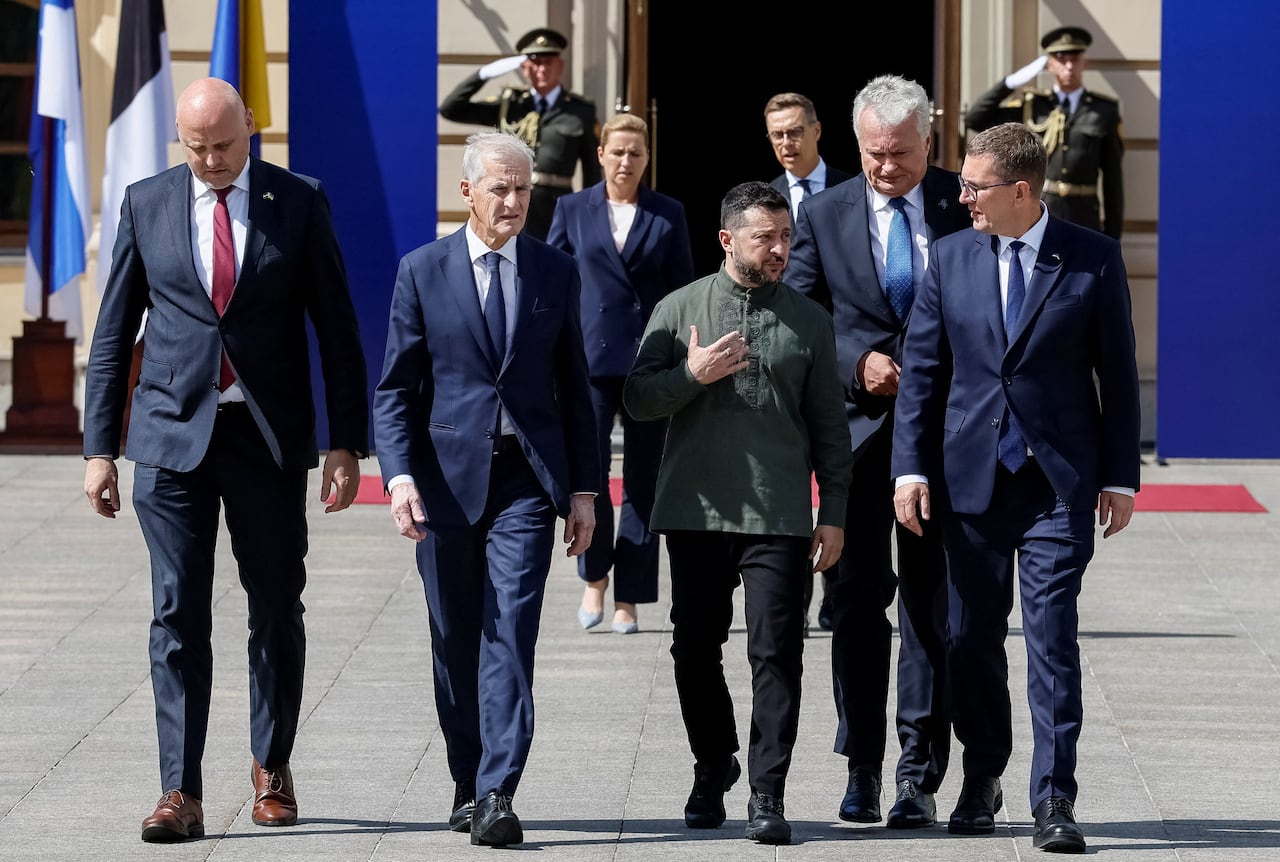
Ukraine’s President Volodymyr Zelenskyy, Denmark’s Prime Minister Mette Frederiksen, Latvia’s Prime Minister Andris Kulbergs, Lithuania’s President Gitanas Nauseda, Finland’s President Alexander Stubb, Norway’s Prime Minister Jonas Gahr Stoere, and Estonia’s Prime Minister Kristen Michal gather for a family photo at a Ukraine-Nordic-Baltic summit (NB8) in Kyiv on Aug. 23. (Gleb Garanich/Reuters)
Kerry Buck, the former Canadian ambassador to NATO, pointed out that Russia has aimed to undermine the alliance since its annexation of Crimea in 2014, and the situation has only become more favorable since U.S. President Donald Trump’s return to power last year.
The ongoing criticism of allies, the new financial expectations placed upon them, the reduction of U.S. forces designated for emergencies, and Washington’s reassessment of its troop presence in Europe have set the stage for a significant political crisis in the event of a provocation.
According to Buck, this situation presents “a window of opportunity for Russia to be emboldened to provoke NATO more, to intrude into NATO territory, airspace, and domains.”
While she does not believe a direct attack on NATO is imminent, she does think Russia is prepared to engage in ambiguous actions.
“Do I think they will do something clearly directed at destabilizing NATO’s decision-making and political cohesion? Absolutely,” Buck asserted.
Trump remarked to reporters last week that he feels “not concerned at all” about Russia attacking NATO territory, stating that he has spoken with Putin, who assured him that he “is not going to attack a NATO territory.”
During a recent meeting of the North Atlantic Council in Brussels, U.S. defense policy chief Elbridge Colby affirmed that Washington is not abandoning Europe. He expressed a desire for a new NATO vision centered around European-led conventional defense.
Buck believes most of Russia’s likely plans fall below the threshold of a direct attack, and she takes Colby’s statements at face value. However, her concern lies within the realm of NATO’s political dynamics.
Historically, during crises, the U.S. has stepped in to coordinate the allied response. Will this trend continue with the current administration?
“All indications from President Trump suggest they are not as committed as they once were, so who would take the lead in the initial response?” Buck questioned.
“And would U.S. reluctance impede that response? We are not just facing a lack of U.S. leadership but potentially a hesitance from the U.S. to engage with whatever NATO is doing or considering doing.”
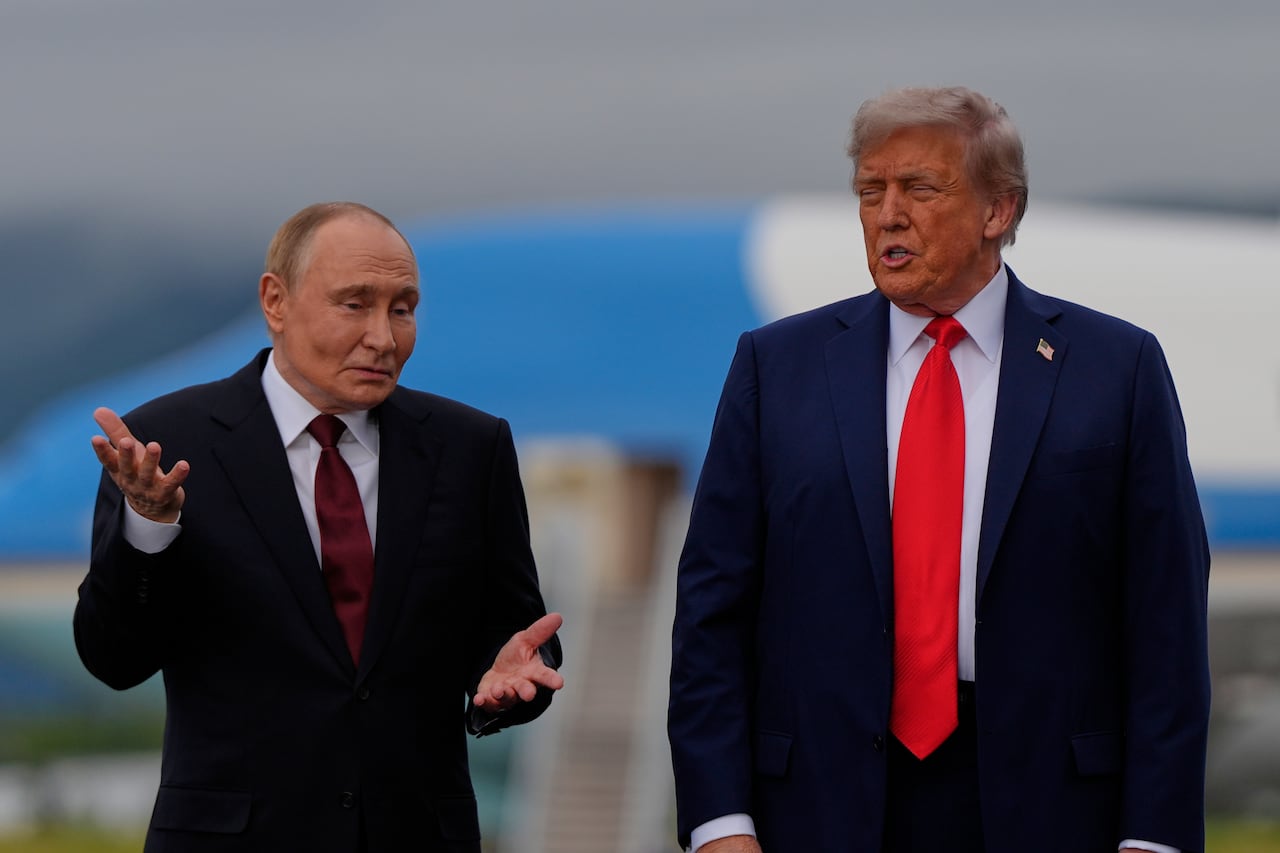
U.S. President Donald Trump and Russia’s President Vladimir Putin converse at Joint Base Elmendorf-Richardson in Alaska on April 15, 2025. (Julia Demaree Nikhinson/The Associated Press)
Recently, Lithuanian intelligence highlighted another concerning scenario: Russia potentially employing captured Ukrainian drones in a false flag operation targeting a Baltic nation.
Lithuanian Defence Minister Robertas Kaunas noted that intelligence suggested Russia might utilize captured Ukrainian UAVs in a scheme designed to appear as though Ukraine had attacked NATO territory.
The aim of such an operation would be political rather than military, aimed at creating confusion within the alliance and weakening support for Kyiv. Russia has dismissed these claims.
However, this scenario gains credibility given that a similar incident occurred in Latvia last spring.
Ukrainian strike drones have frequently strayed into NATO airspace, seemingly in some instances due to Russian electronic warfare disrupting their navigation.
The incident in Latvia led to a political crisis, resulting in the resignation of the defense minister and ultimately costing the prime minister her position.
Buck indicated that there are numerous troubling scenarios for Moscow to exploit.
“Now is the time for them to act,” she said. “And I don’t believe NATO is fully prepared to respond, particularly given the uncertainty surrounding the U.S. reaction.”
Tag: rewrite-pending