

Over the last five years, vehicles have fatally struck nine wolves along a section of unfenced highway within Yoho National Park.
According to Parks Canada, the most recent incident involved an adult female that was killed on October 17.
Experts emphasize that these fatalities underscore the critical necessity for wildlife fencing and crossings on this highway segment, where enhancements have been suggested for numerous years.
This unfenced stretch of highway extends approximately 40 kilometers west of Lake O’Hara across Yoho National Park.
The park is home to a primary wolf pack, and Parks Canada confirms that two of the nine wolves that died on the road were part of this pack, one in 2023 and another in 2024. Both individuals were fitted with tracking collars.
Parks Canada states that this area of the highway lies within the territory of the pack, and the ages and locations of the other seven wolves indicate they may also have been members of the pack. However, the agency cannot verify the pack affiliation for those seven wolves.
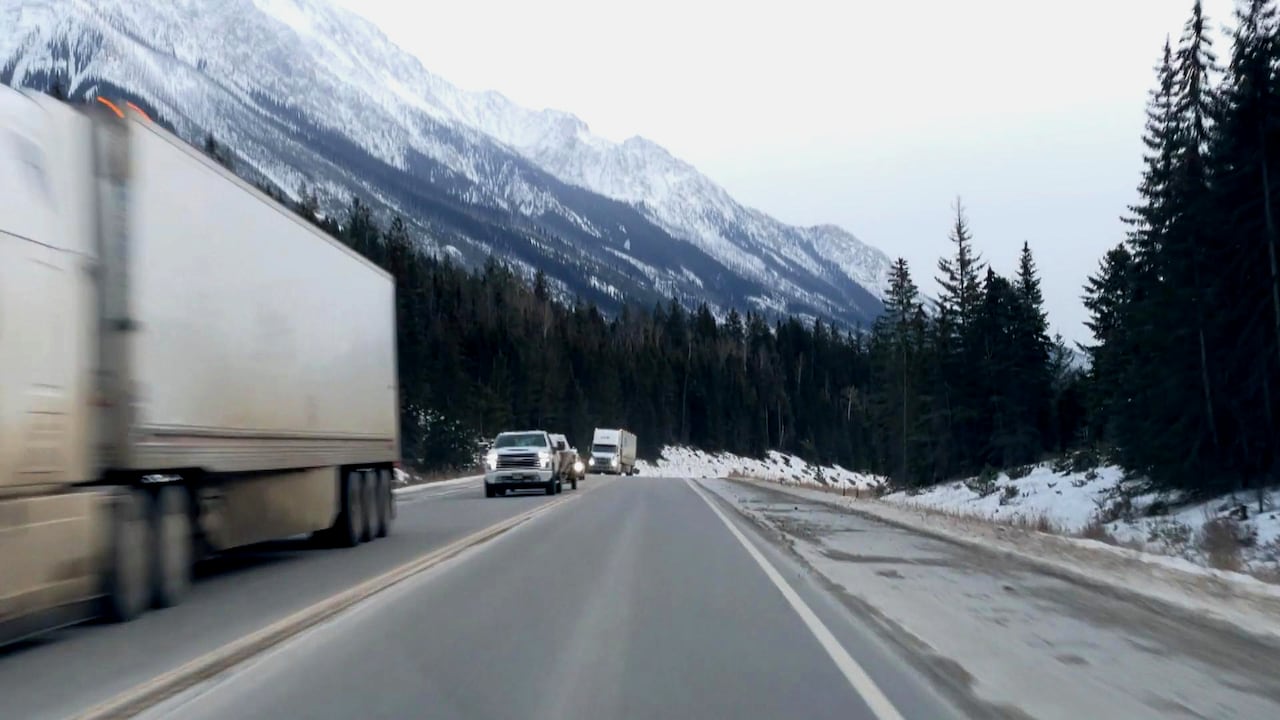
Much of the Trans-Canada Highway through Yoho National Park remains a two-lane, undivided road without wildlife fencing or crossings. (Evelyne Asselin/Radio-Canada)
Parks Canada also mentioned that the current size of the Yoho wolf pack is unknown. The agency notes that tracking and collaring wolves presents challenges for researchers.
According to Shelley Alexander, a wolf researcher at the University of Calgary, wolf packs usually consist of five to nine individuals.
Wolves are known to live in close-knit family groups, and the loss of even a single member can significantly impact the entire pack, she explains.
“It will undoubtedly alter the dynamics,” Alexander states. “Each wolf has its specific role within the family.”
She adds that the loss of adult wolves can hinder the pack’s hunting capabilities and result in the loss of crucial knowledge passed down through generations.
Alexander studied wolves in Banff National Park during the 1990s and 2000s when certain areas of the Trans-Canada Highway lacked wildlife fencing and crossings. She notes that vehicle collisions were a major factor in the decline of a wolf family in the park around two decades ago.
“Their numbers were drastically reduced, and it took considerable time for them to repopulate and reestablish,” she recounts.
She warns that a similar situation could arise in Yoho if most of the nine wolves lost on the highway were indeed part of the park’s main pack.
Additionally, she points out that roads are not the only threats these wolves face.
“The reality for many of these wolves is that they cannot spend their entire lives within a protected area,” she says. “They will inevitably traverse regions where they can be shot or hunted and trapped.”
Advocacy for highway enhancements
Tony Clevenger, a wildlife ecologist with 30 years of experience studying highway safety, authored a report in 2017 concerning wildlife fatalities on the highway in Yoho.
He observes that this particular section of highway is notable because adjacent mountain parks like Banff have implemented top-tier protections for wildlife.
“This segment in Yoho National Park, which is equally important as the other side in Banff National Park, remains unaddressed,” he emphasizes.
Clevenger also states that various other species, including grizzly bears, cougars, elk, and deer, are also victims of vehicle strikes on this highway.
Research conducted in Banff National Park demonstrates that wildlife fencing and crossings effectively protect animals.
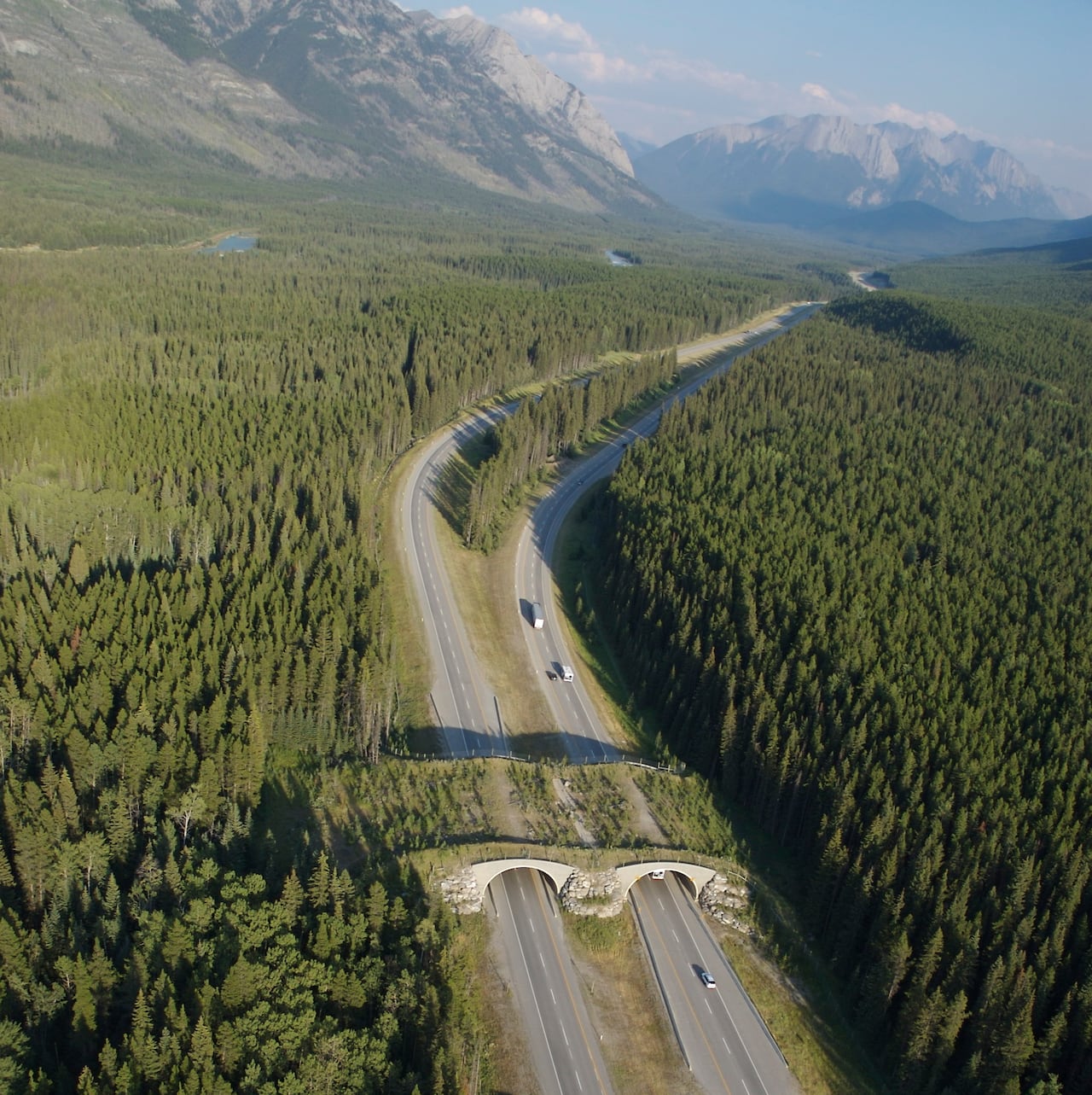
Parks Canada reports that Banff National Park features 82 kilometers of wildlife fencing and 44 wildlife crossings — the highest concentration globally. (Parks Canada)
Since the introduction of fencing and crossing structures in Banff, Parks Canada indicates that wildlife-vehicle collisions have decreased by over 80 percent.
Clevenger points out that the highway poses risks to drivers due to wildlife collisions and its two-lane configuration. He remarks that much of the Trans-Canada Highway in the surrounding areas has been expanded to four lanes, with barriers separating traffic to mitigate the chances of head-on collisions.
Parks Canada has outlined plans to widen the highway and incorporate wildlife fencing and crossings.
However, this initiative has yet to secure federal funding.
In a statement to CBC News, Environment and Climate Change Canada (ECCC) did not clarify whether funding would be allocated for upgrading the highway.
ECCC mentioned that it has invested over $375 million in the Trans-Canada Highway across four mountain national parks since 2014.
Parks Canada asserts that it “takes wildlife mortality seriously and is actively monitoring wildlife populations and vehicle collisions involving wildlife in Yoho National Park.”
The federal agency also stated that it employs various strategies to minimize animal fatalities, which include “monitoring wildlife, managing attractants, and installing signage to raise driver awareness.”
Clevenger expresses frustration over the government’s inaction.
“They’ve been discussing this for a lengthy period. It is high time they complete the task.”
Clevenger mentions that as visitor numbers to the park continue to rise annually, the likelihood of wildlife fatalities on the highway will also increase until these enhancements are implemented.