

A United Nations special rapporteur has released a scathing report regarding the U.S. military’s missile strikes on vessels allegedly involved in drug trafficking, labeling these actions as “serial extrajudicial killings.”
Ben Saul, who holds the chair of international law at the University of Sydney, delivered his findings on the assaults targeting boats in the Caribbean Sea and Pacific Ocean prior to the latest incident. On Saturday, the U.S. military struck a boat suspected of drug smuggling in the Caribbean, resulting in the deaths of four individuals and raising the total fatalities in this military campaign to at least 231 across 69 attacks since September 2025.
The administration under U.S. President Donald Trump has asserted its right to self-defense, describing the situation as an armed conflict with narco-terrorists. Last year, the White House invoked the historic Alien Enemies Act to declare that the Venezuelan gang Tren de Aragua is conducting an “invasion” and “irregular warfare” against the U.S. through its drug transport activities.
The administration aimed to link Tren de Aragua’s drug dealings to the government of Nicolás Maduro. Nevertheless, strikes on vessels have persisted even after the U.S. military apprehended Maduro in a January operation and began collaborating with a former member of his administration, interim President Delcy Rodriguez.
In his report, Saul argued that the U.S. military operations lack justification on multiple fronts, including international humanitarian law, maritime law, international counterterrorism statutes, drug suppression agreements, and principles of national or individual self-defense.
Saul stated, “The U.S. military actions are… in direct violation of international law, infringe upon the human right to life, and likely amount to crimes against humanity.”
Independent experts appointed by the UN Human Rights Council have previously criticized these attacks as well.
Three Ecuadorian Vessels Missing
Saul pointed out that the U.S. claims of self-defense are flawed, as no evidence has been provided to demonstrate a threat of armed attack from any of the targeted boats, rendering the military actions disproportionate.
According to Saul, the U.S. has not proven that the Venezuelan government dispatched the boats. He emphasized that even if they had, “drug trafficking does not equate to a military assault.” He noted that most drug consumption does not lead to immediate death or serious injury, highlighting that numerous intervening actions occur within the supply chain before a user consumes drugs.
“There are substantial reasons to believe that the 68 attacks reported, which resulted in 223 fatalities, could be categorized as crimes against humanity under customary international law,” Saul remarked.
“Murder is defined as the unlawful killing of an individual where the perpetrator either intended to cause death or was aware that death would likely occur in the usual course of events.”
Saul also expressed worries in his report regarding three additional vessels that have “sunk under suspicious circumstances without any accountability.” This list includes the Ecuadorian boat Fiorella, whose crew of eight to ten members vanished at sea in January. The crew had reported being under surveillance, and relatives assert that the Fiorella was a fishing vessel.
In June, Gloria Alexandra Bravo Cedeño, the Ecuadorian prosecutor assigned to investigate the disappearances of the three vessels, was shot dead. No one has been arrested in connection with her murder.
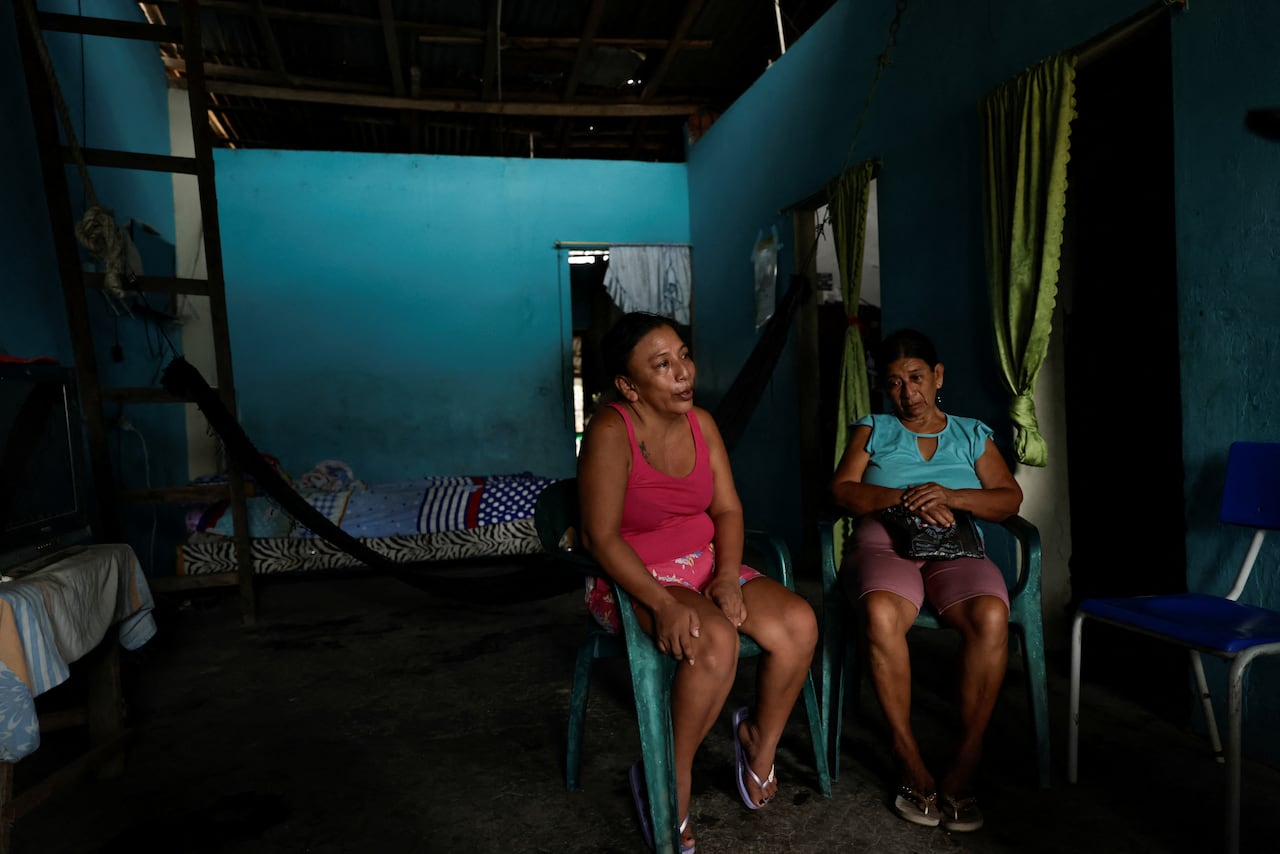
Maria Mero, right, alongside her mother Maria Cueva, speaks to Reuters on June 4 in Jaramijo, Ecuador, about her husband Gabriel Aladino Mero Delgado and brother Jefferson Ariel Mero Cueva, who disappeared from the Fiorella earlier this year. (Karen Toro/Reuters)
Criteria for Targeting Boats Kept Classified
During a committee hearing in July, U.S. Secretary of State Marco Rubio stated that various intelligence from multiple sources is evaluated prior to strikes, which are executed by drones and fighter jets.
“Every attack has a legal officer present who must determine whether the action is lawful, as directed by the Department of War — consistent with procedures followed in other global theaters,” Rubio explained.
“I can assure you they do refrain from proceeding with strikes,” he added at another point.

The White House confirmed it authorized a second airstrike on an alleged Venezuelan drug boat in September, but denied it ordered everyone on board be killed, which would be considered a war crime.
The U.S. Defense Department, which has been rebranded as the Department of War under the Trump administration, is said to utilize three criteria to determine when to conduct strikes, although the specifics remain classified.
Democratic Senator Tim Kaine of Virginia, while refraining from revealing classified details, expressed surprise during the July hearing that the presence of narcotics on a vessel is not included among the targeting criteria.
Senator Rand Paul, a prominent Republican critic of the strikes, noted that the presence of weapons is also absent from the criteria. Paul, representing Kentucky, voiced concerns regarding the campaign given its historical context in drug interdiction initiatives.
“Statistics from the U.S. Coast Guard indicate that when we intercept alleged drug boats using traditional methods, about one in four does not carry drugs,” Paul stated.
“Errors occur. We may find something suspicious about a boat, stop it, and discover it is not carrying drugs,” he added.
-
These Trinidadian fishermen were killed in a U.S. boat strike. Now their families are suing
-
U.S. sending survivors of strike on alleged ‘drug-carrying submarine’ back to South America, Trump says
Lawmakers from both political parties expressed particular concern regarding reports from a strike on September 2, 2025, which resulted in two fatalities when individuals climbed onto a section of a boat that had been partially destroyed in an initial strike.
According to Saul, that event constitutes “a violation of the right to life and the obligation to provide rescue at sea.”
Traffickers May Be Adjusting to Military Actions
Similar to other strikes, the U.S. military did not present evidence that the vessel targeted in the Caribbean was transporting drugs. A video shared on X displayed an image of what appeared to be a moving boat followed by a flash.
Vice President JD Vance remarked on social media that “eliminating cartel members who endanger our fellow citizens is the most appropriate use of our military force.”
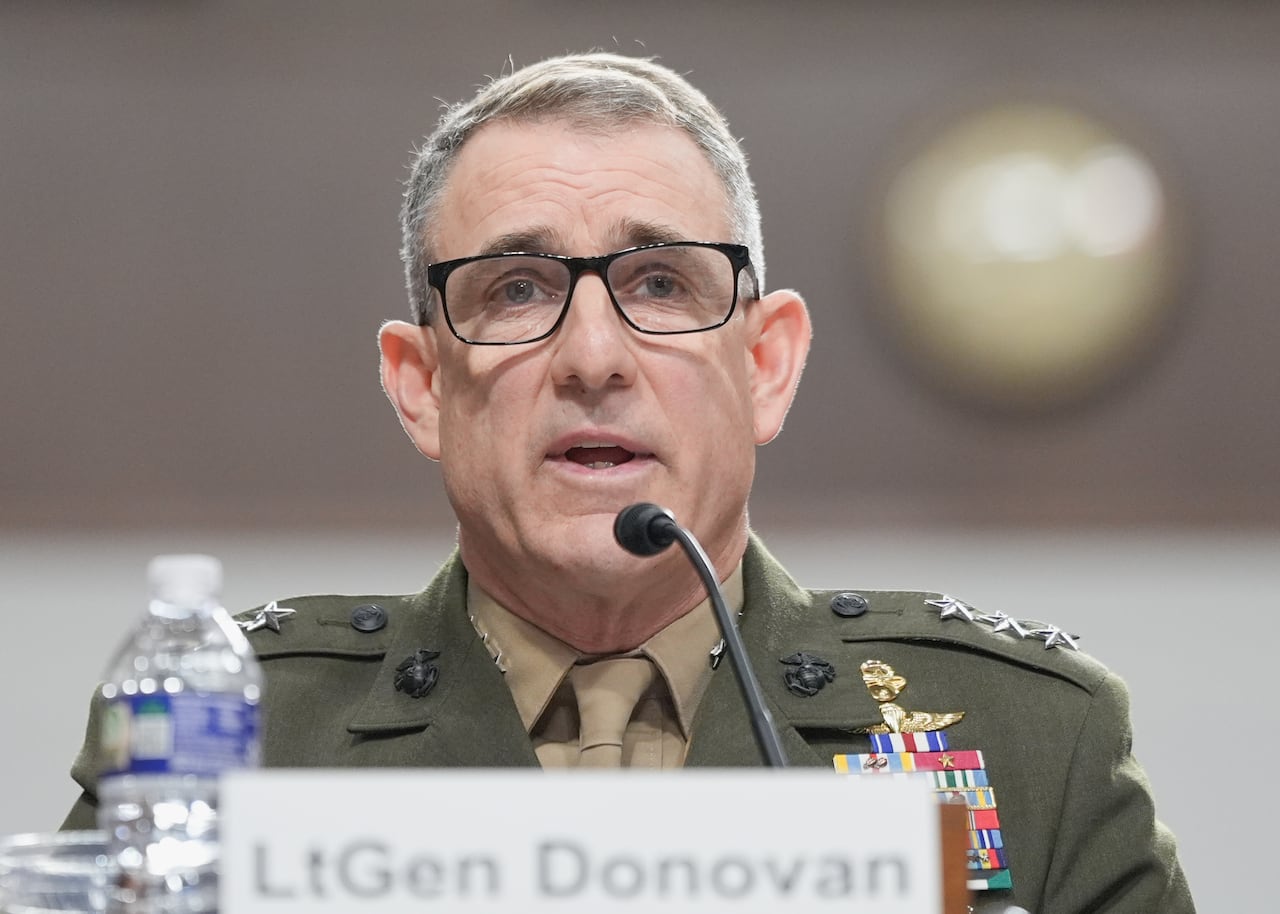
Gen. Francis Donovan, shown at a U.S. Senate committee hearing on Jan. 15, has testified that the strikes might not be the most effective way of dealing with drug trafficking at sea. (Mariam Zuhaib/The Associated Press)
For approximately the past decade, the U.S., much like Canada, has been grappling with an increase in drug toxicity deaths, primarily linked to the potency of fentanyl and similar opioids.
While the Venezuelan gangs are better known for smuggling cocaine, analysts indicate that they do so in smaller quantities compared to gangs or cartels from Colombia or Bolivia. Furthermore, it remains uncertain whether the struck boats were transporting goods destined for the U.S. as opposed to Europe or Africa.
Gen. Francis Donovan, who oversees the U.S. military’s Southern Command, acknowledged in March during congressional testimony that boat strikes “will be a primary tool, though not necessarily the most effective” in curbing the illegal flow of drugs.
A report from the Washington Post in late July indicated that a U.S. Drug Enforcement Administration assessment shared with legislators revealed that traffickers are adjusting their maritime routes to avoid international waters and are increasingly utilizing aircraft for drug transportation.
Mark Carney’s government has generally refrained from publicly criticizing the strikes unless prompted by inquiries from journalists, although the Canadian military has stated that it limited intelligence sharing to Operation Southern Spear, the U.S. initiative that includes strikes on the vessels.
Read the report: