

As the Trump administration plans to implement additional tariffs on Canada starting in January, numerous Canadians are pondering: What strategies can we employ to persuade them to rethink their stance?
This inquiry implies that there are tangible actions we can take to alter U.S. President Donald Trump’s perspective—suggesting that if Canada retaliates sufficiently, or shows a readiness to endure hardship, a shift in policy could be achieved.
Christopher Ragan, who is the founding director of McGill University’s Max Bell School of Public Policy and a former chair of Canada’s Ecofiscal Commission, articulated it this way: “Canada is engaged in negotiations with a party that seems unpredictable and volatile, so I don’t think anyone truly knows what will be effective here.”
Don Drummond, former chief economist at TD Bank, noted that if Canadians are prepared to accept the fallout, there are various methods to respond to the U.S.
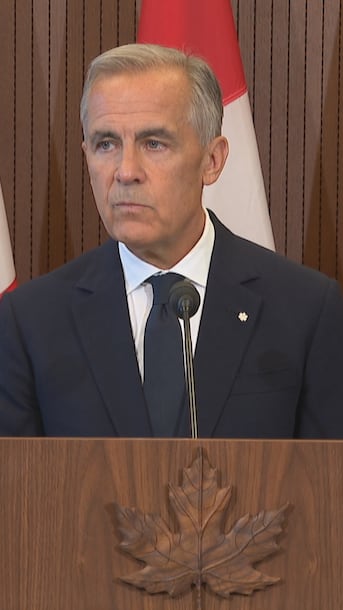
Prime Minister Mark Carney described U.S. President Donald Trump’s new 50 percent tariffs as a ‘miscalculation’ since Canadians are united and ‘masters of our destiny.’
“You begin by targeting what they have indicated is most crucial to them,” Drummond explained. “They have made it abundantly clear that their primary interest in Canada lies in oil, and perhaps for a limited time, electricity.”
“In the past, we imposed an export tax on oil and natural gas, and we could do so again. Quotas could also be implemented,” he added.
Canada holds considerable leverage regarding energy and fertilizer. In 2025, Canadian resources constituted 63 percent of the oil imported by the U.S., 81.3 percent of imported electricity, nearly 100 percent of imported natural gas, and 80 percent of the potash imported.
Various Non-Tariff Alternatives
While Canada is still in the process of fully developing its critical mineral reserves, Drummond suggests that we could inform the U.S. that preferential access will not be granted when these reserves become operational.
“We could also limit American access to Canada,” he remarked. “In extreme cases, we could require visas and be quite restrictive.”
Additionally, Canada might opt not to procure the F-35 fighter jets from the U.S. and instead select the Gripen from Sweden, he suggested.
Canadian financial institutions, government entities, pension funds, and others currently possess approximately $459.6 billion US in U.S. Treasury bonds.
“Considering that the U.S. is currently grappling with efforts to lower their long-term bond yields, if we announced we would divest from those bonds, or at least cease further purchases, it would certainly irritate them,” Drummond stated.
-
Carney says trade deal became untenable when U.S. ‘asked too much and offered too little’
-
Carney says he’ll resume negotiating when Trump team has the ‘right attitude’
Drummond further remarked that Canada’s CPP fund could divest from all U.S. holdings (51 percent of the $864 billion fund is invested in the U.S., compared to only 12 percent in Canada), but cautioned that this would risk using Canadians’ retirement savings as a political instrument, endangering retirees—a move he believes should be avoided.
“We could reintroduce the digital services tax; after all, why did we concede it? We received nothing in return,” Drummond commented.
He also mentioned the possibility of discontinuing the Canadian Film or Video Production Tax Credit, which he argues results in an annual tax revenue loss of around $500 million, with minimal economic advantage for Canada.
“Thus, the range of potential actions could be quite extensive—ranging from export restrictions to export taxes, and more,” Drummond stated.
Some economists caution that while these non-tariff strategies may seem appealing and would certainly inflict damage on the U.S. economy, they could result in greater harm to Canada’s economy.
Short-Term and Long-Term Consequences
“Emotions are running high, and there is a desire to retaliate, but cooler heads should prevail, allowing us to reflect on our objectives,” remarked Trevor Tombe, director of fiscal and economic policy at the University of Calgary’s School of Public Policy.
Tombe indicated that the 50 percent tariffs on approximately $27 billion worth of Canadian goods would lead to a reduction in Canadian GDP of around 0.4 to 0.5 percent, and retaliatory measures that exceed this cost do not make economic sense unless they effectively alter U.S. actions.
“Implementing such measures is far easier said than done,” Tombe acknowledged. “If we initiate actions that increase costs in the U.S., it may inadvertently benefit the U.S. administration by providing them with a scapegoat in Canada.”
Beyond the immediate detrimental impact on Canada’s economy, there is a longer-term downside: potential harm to its future growth.
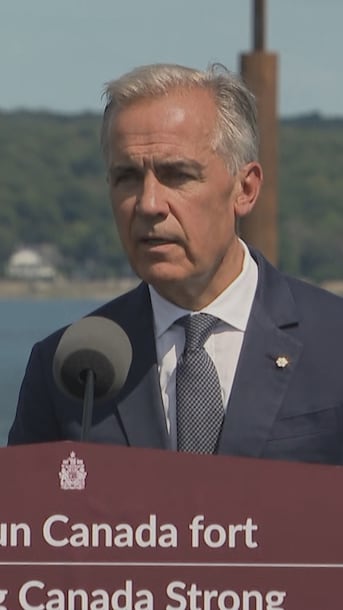
When asked by the Globe and Mail when Ottawa will come back to the table to hammer out a trade deal with Washington, Prime Minister Mark Carney said his delegation won’t accept attitudes that see Canada as a ‘subsidiary’ of the U.S. Carney’s comments come after U.S. Transportation Secretary Sean Duffy said Canada would come back to the table due to its dependence on the U.S. for security.
“We might possess considerable leverage and the ability to inflict pain, but it comes with significant costs for us, as we risk losing revenue and potentially damaging relationships with our primary customer,” stated Wolfgang Alschner, the Hyman Soloway Chair in Business and Trade Law at the University of Ottawa.
What if, for instance, the U.S. were to replace all Canadian oil with Venezuelan oil within a decade?
-
Analysis
How Venezuelan crude could shake things up for Canadian producers
-
Cutting off oil is Canada’s nuclear option. What would it mean if it happens?
Alschner points out that China’s export restrictions on critical minerals have encouraged the U.S. to explore new agreements, seek alternative customers, and establish new critical mineral supply chains. Canada’s efforts to diversify amid the Trump administration’s trade conflict serves as a prime example.
“Even if enacted temporarily, it sends a message that such actions can be initiated and halted. While the U.S. may not have the opportunity to address that disruption immediately, it will likely develop strategies to manage it in the future,” he noted.
Alschner also stated that reinstating concessions like the Digital Services Tax or eliminating tax credits would serve as direct provocations without guaranteed benefits.
At Times, Combat is Inevitable
Ragan from McGill University believes that the U.S. would likely respond aggressively to export controls or taxes that raise U.S. gas prices, potentially uniting Americans against Canada due to energy shortages caused by Canada.
“Such a move would escalate the trade conflict significantly,” Ragan asserted. “I say this somewhat humorously, but I wonder if restricting electricity or oil sales would provoke Donald Trump to mobilize the military. I’m not entirely sure.”
Some economists argue that instead of taking steps that would harm the Canadian economy both short and long term, Canada should concentrate on expanding trade opportunities and diversifying its economic base while fostering growth domestically.
“Another perspective on the U.S. at this point, which I find somewhat useful, is that they are floundering in increasingly irrational manners while we are bearing the brunt of their actions,” Tombe said.
“Given that their actions seem erratic and lack sound economic logic, the most prudent approach might be to step back, endure the turmoil, and hope they resolve their internal issues.”
-
Interprovincial trade barriers are falling. But rewriting old rules will take time
-
Will auto tariffs be a permanent roadblock for a Canada-U.S. trade deal?
Tombe notes that aside from the overarching goal of diversifying exports, signing new trade agreements, and building up domestic industries, Canada has yet to fully liberalize internal trade, which he considers a straightforward opportunity.
He believes that by simply acknowledging credentials nationwide, Canada could enhance productivity enough to counterbalance a 25 percent uniform tariff.
Alschner observes that Canada currently benefits from the fact that the EU and other global trading partners are entangled in similar trade disputes with the U.S., which may increase their willingness to collaborate with Canada.
“We should seize this moment to strategically replace U.S. imports with carefully chosen non-U.S. imports,” Alschner proposed. “We should approach the European Union and ask, ‘What can you provide us that the U.S. used to supply?'”
Tombe acknowledges that despite numerous economic arguments against implementing non-tariff retaliatory strategies in this trade dispute, Canada’s confrontation with the U.S. transcends purely economic considerations.
As Prime Minister Mark Carney has indicated, the U.S. aims to undermine us to gain control, and many argue that a threat to our sovereignty demands a response beyond economic measures.
“I’m growing increasingly weary of fellow economists who point out that retaliating would be detrimental to Canada. I find that perspective too narrow,” Drummond expressed.
“I would advise the child being bullied in the playground that stopping a bully often requires being ready to take a few hits yourself. Otherwise, you only encourage them.”